What happens when a missionary with 27 years of field experience discovers he can build a working video game on a flight from DC to San Francisco — without writing a single line of code? You get a new vision for what's possible when the church embraces AI.
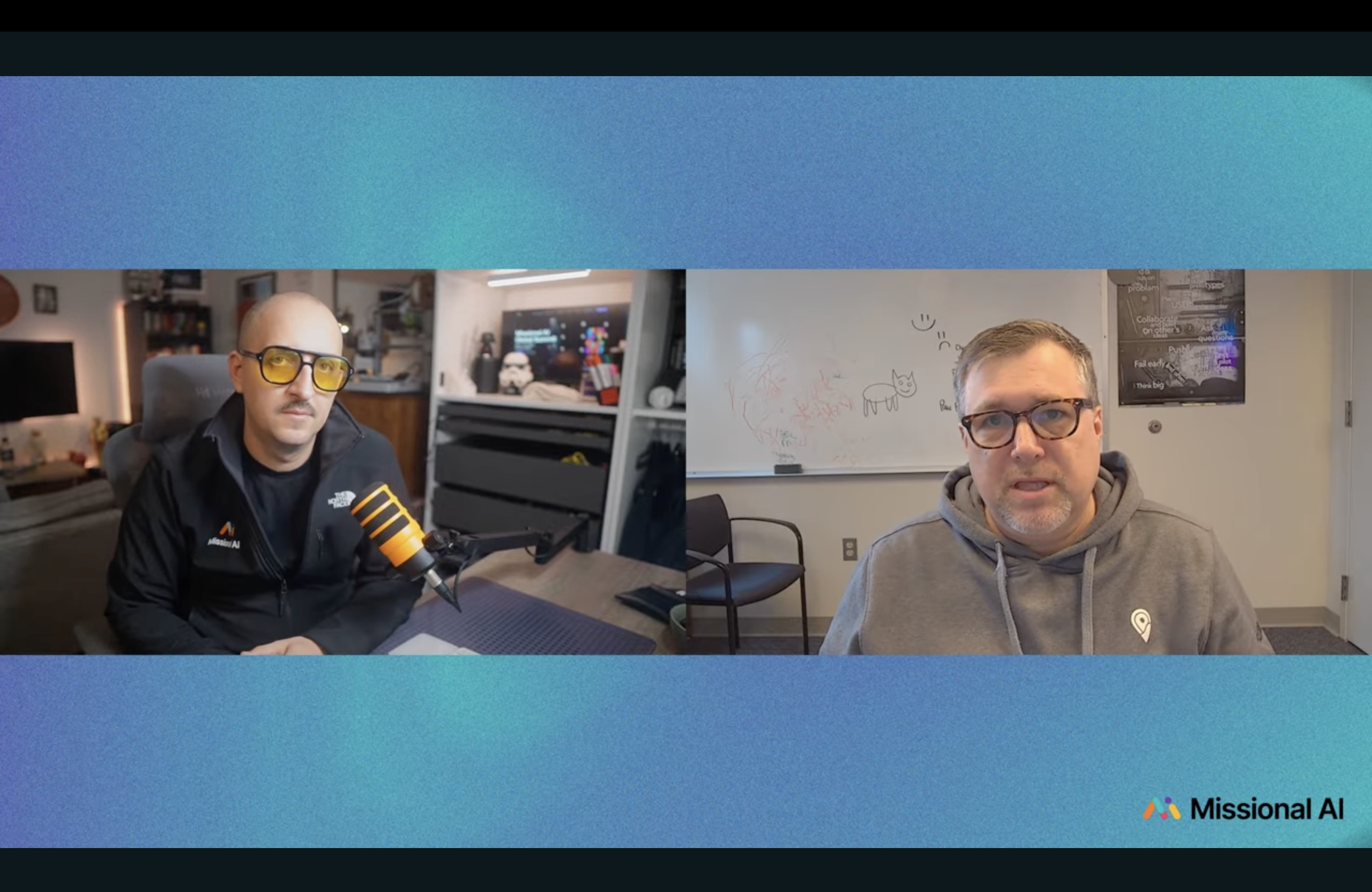
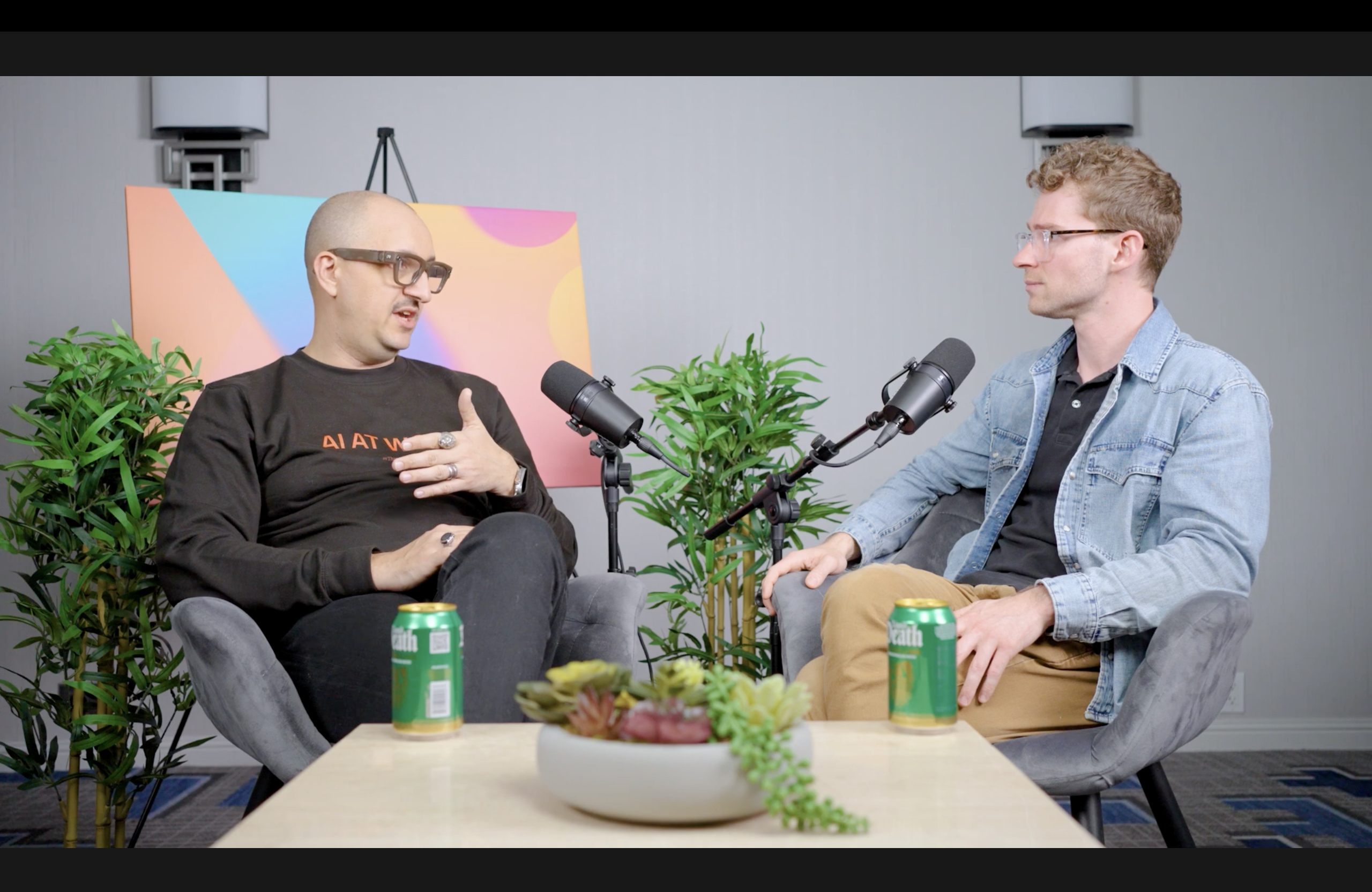
That's exactly what happened to Dr. Don Barger, Director of Innovation and Artificial Intelligence at the International Mission Board (IMB) — one of the largest evangelical mission organizations in the world. In our latest episode of the Global Missional AI Podcast, Don sat down with host James Palter for one of the most practically useful conversations we've had on the show yet. No gatekeeping. No theoretical abstractions. Just a front-row seat into how one missional innovator is using AI to accelerate the Great Commission.
The Church Has Always Been an Innovator — Until Recently
Before we dive into the tools, Don makes a point worth sitting with: the church hasn't always been afraid of innovation. Modern medicine, agricultural techniques, the printing press — many of history's most disruptive breakthroughs either emerged from Christian communities or were championed by followers of Christ. The Gutenberg revolution that democratized the Bible is perhaps the most obvious example.
"If the church steps back and doesn't get involved," Don warns, "we are leaving the development of these tools to be developed by people who are driven by other values."
That's not a political statement. It's a missional one. At MAI, we believe that faithful engagement with emerging technology — not retreat from it — is how the church fulfills its calling in every era. Don's work at IMB embodies that conviction.
What "Vibe Coding" Actually Means (and Why It Matters for Ministry)
Vibe coding — a term coined by AI researcher Andrej Karpathy in early 2025 — describes building software primarily through natural-language conversation with an AI agent. Instead of writing code line by line, you describe what you want, review what the AI builds, and iterate. Merriam-Webster named it a "slang & trending" expression, and Collins Dictionary declared it the Word of the Year for 2025.
But Don extends the concept further into what he and James call "vibe working" — applying the same conversational, iterative, AI-assisted mindset not just to code, but to entire workflows: presentations, websites, audio content, training materials, and ministry tools.
The results are striking. On a flight to San Francisco, a colleague sent Don an idea: What if we built a missions-themed version of Oregon Trail? A few hours of in-flight vibe coding later, Don landed with a working video game prototype — The Missional Trail — built from scratch. On a separate trip to Thailand, jet-lagged at 1:00 a.m. before a 9:00 a.m. training, he rebuilt his entire presentation into an interactive website — and it worked perfectly when he stepped into the room eight hours later.
For people in ministry leadership who have always felt locked out of technology because they "aren't developers," this is the paradigm shift.
The Design-Thinking Foundation That Makes It Work
Don is quick to point out that the tools are only as powerful as the problem-solving mindset behind them. His approach begins not with "what can AI do?" but with "what am I actually trying to solve?" — a design-thinking discipline he's applied throughout his career in oral cultures and cross-cultural mission work.
"Most people are rushing to solutions before they've defined the problem," he explains. The tools accelerate everything after you've done that diagnostic work — which means clarity of purpose is more important than ever.
This is a word of wisdom the MAI community needs to hear. AI lowers the barrier to building, but it doesn't lower the bar on discernment. If anything, the speed at which you can prototype demands more intentionality, not less.
Running AI Locally: Security-First for Sensitive Mission Work
One of the most important — and underreported — threads in this episode is Don's commitment to security-first AI deployment. Working in global missions often means handling sensitive information: personnel locations, unreached people group data, field worker communications. Feeding that kind of data into commercial AI tools is a genuine risk.
Don's solution: run AI models locally using tools like Ollama, a lightweight framework for hosting large language models on your own hardware. He runs multiple models on a Mac Studio with 128GB of memory — and accesses them securely from anywhere in the world using Tailscale, a zero-config VPN tool.
"The notes aren't going anywhere. They're not leaving. They're sitting right on your local machine," he explains. For voice generation, he uses the QWEN3-TTS model — a locally-installed, internet-free audio generation tool that can clone voices and produce content in multiple languages. He demonstrated this live on the podcast by generating a cloned voice of James Palter saying things he never said — which brought laughter but also a necessary ethical pause.
Don doesn't shy away from the implications. Locally-run voice cloning has no moderation guardrails. The ethical responsibility rests entirely with the user. It's a sobering reminder that technological capability and ethical maturity must grow together — a tension at the heart of why events like the MAI Summit exist.
The Tools Don Is Using Right Now
For those ready to explore, here's a practical starting-point stack drawn from Don's workflow:
- Claude Code — Anthropic's agentic coding assistant, usable in the desktop app or terminal. Don recommends it as one of the best entry points for non-developers.
- VS Code — A free, open-source code editor that lets you visualize what the AI is building in real time. Claude Code integrates directly into it.
- Ollama — For running LLMs locally, without sending data to the cloud. Essential for security-conscious mission work.
- Tailscale — For securely accessing your home AI machine from anywhere in the world.
- Whisper / Whisper Flow — Voice-to-text transcription tools that let you interact with Claude Code by speaking rather than typing. Don maps his mic to a mouse button and never types a prompt.
- Faithbot.tools — Don's own platform, housing dozens of missional AI chatbots across multiple languages and worldviews, built entirely through vibe coding.
What This Means for the Missional Community
Don puts it plainly: in the past, the things he's building now would have required a whole development team, a budget, and months of back-and-forth. Today, a missionary with a problem, a laptop, and a few hours on a flight can have a working prototype.
That's not hyperbole — it's a Tuesday.
The message for ministry leaders, mission mobilizers, and church innovators is simple: the barrier to missional technology has never been lower. The question is no longer can we build it? It's do we have the clarity, the courage, and the theological grounding to build it well?
The church has led the world in innovation before. It's time to do it again.
Missional AI Global Summit 2026 
MAI 2026 isn't just a conference—it's a movement of Christians engaging AI as builders and leaders, not merely respondents. A movement believing technology can serve human flourishing when guided by Kingdom principles. A movement declaring: Redemptive AI isn't just possible—it's part of our calling.
Discounted tickets are available through March 10. Now is the time to become a part of the discussion. Join us in Silicon Valley.
Watch Missional AI Podcast