AI Fear
AI in Missions
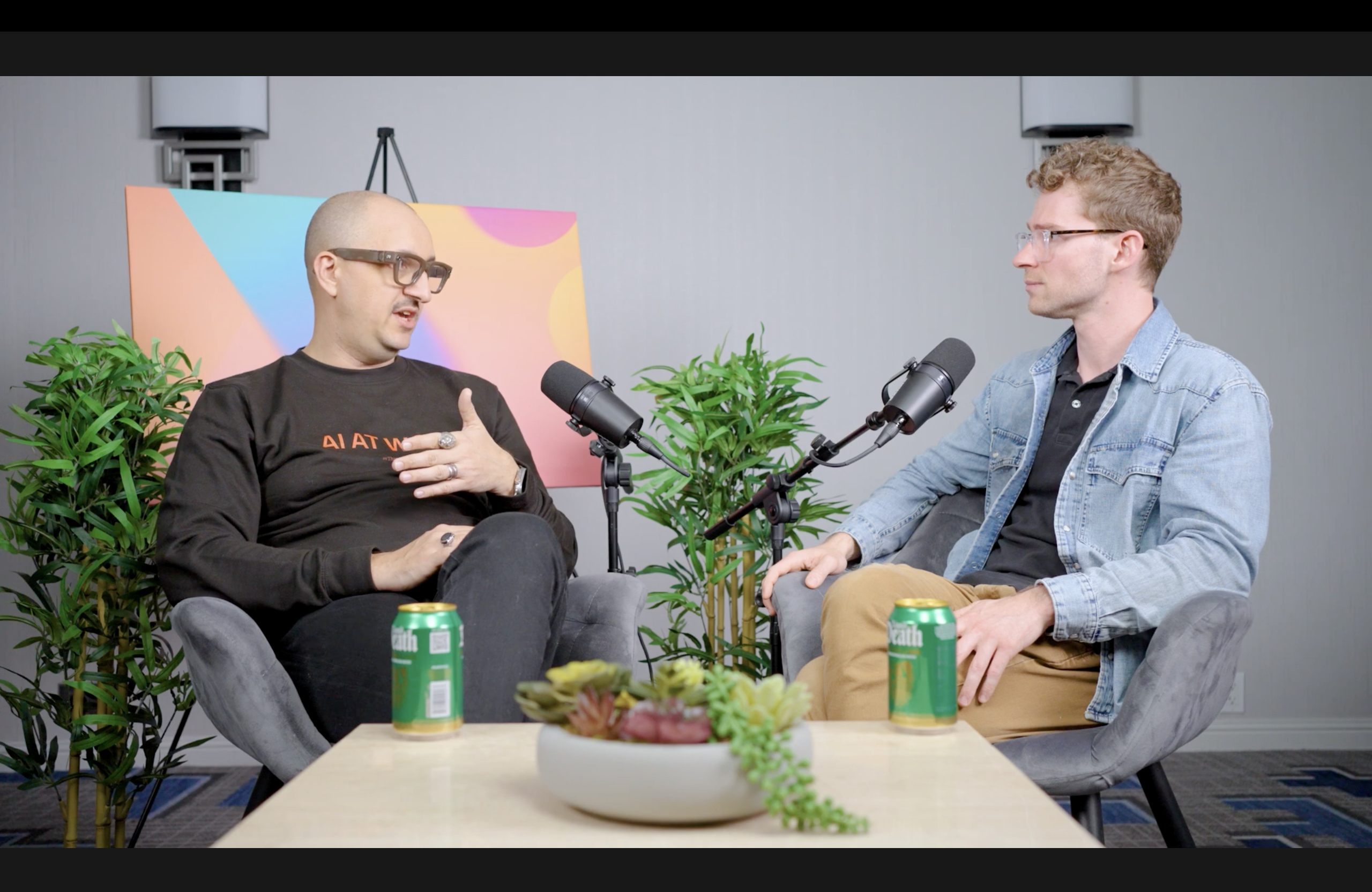

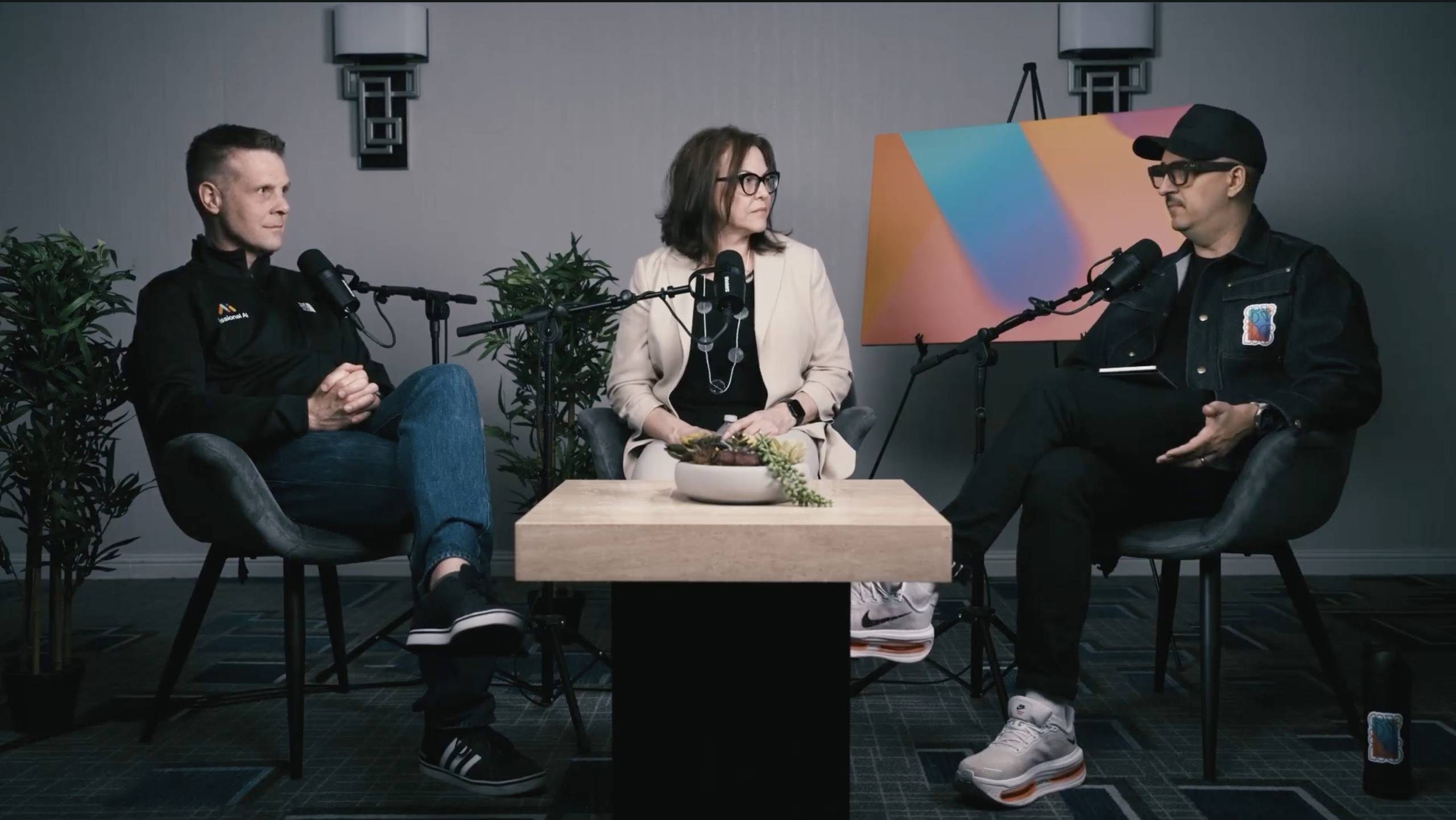
Reflections from James Poulter's conversation on the Global Missional AI podcast, ahead of his new book AI at Work (August 2026).
You've heard the line a hundred times: AI is taking our jobs. It's the sentence that ends careers in the imagination before anything has actually happened at the office. But on a recent episode of the Global Missional AI podcast, innovation strategist and futurist James Poulter (known to many in the community as JP) offered a more careful, and more hopeful, way to see what's really going on.
His argument, drawn from his forthcoming book AI at Work, is that the rhetoric gets the mechanics wrong. AI isn't taking jobs so much as taking pieces of them — and in doing so, it's quietly handing us back the chance to do the work we were actually called to do. That reframe sounds small. It isn't. Once you follow it through, almost everything about how we work, lead, and understand ourselves starts to shift.
JP draws a distinction we tend to blur. In the truest sense, he says, "a job is a bit of the work that you do." Most of us don't have a job; we have a role made up of many jobs. The call-center worker whose entire role is to answer the phone and read from a script may genuinely see that role disappear. But for the vast majority of knowledge workers, AI is coming for individual tasks inside a role, not the role itself.
This is the foundation of what he calls the full stack organization — a company made up of "full stack professionals" who handle many parts of the work rather than a single slice. It's a hopeful idea, especially for the youngest workers. For generations, your first job wasn't really a role at all; it was a pile of repetitive tasks you learned by rote. AI will take those. But that frees organizations to give newcomers exposure to the whole career path from the start, rather than trapping them at the bottom of the ladder doing the grunt work.
If this feels destabilizing, Poulter offers historical perspective. Software went from punch cards to binary to assembly code to programming languages to apps — and now to AI that writes code for you. Each step was a new layer of abstraction. Each removed grunt work almost nobody enjoyed. Someone once programmed computers in raw ones and zeros; when that job vanished, we didn't mourn it, because "who wants to do that?"
The same abstraction is now happening for everyone whose work touches a computer. We spent years learning to manipulate software to get an outcome. Increasingly, we talk to an AI that manipulates the software for us — and soon, he predicts, we'll talk to one AI that coordinates many AIs across many tools. The specialist roles of user experience, graphic design, and coding, for instance, are beginning to collapse into a single person, or a community, "treating a problem as a problem" rather than as a UI problem or a code problem.
Here's the thread I found most striking. When the way we work changes, Poulter says, "it's not just getting the same outcome but different, or even getting the same outcome just faster. Something goes on in us as workers that also changes."
His analogy: getting from A to B on a bicycle, in a car, and on an airplane are not the same journey. The bicycle is physically exhausting — hands on the handlebars, legs doing the work. The car removes the physical strain. The airplane removes even the cognitive strain; you're no longer flying it, so you can do something else entirely, or simply rest. We've already lived one version of this shift, from the physical labor of the industrial age to the mental labor of the desk and spreadsheet. AI, he suggests, is the next one: from mentally taxing work toward something that may become more leisurely, more social, or genuinely new.
But there's a cost worth naming. When you take away the agency of doing the work yourself, you can also weaken your relationship to it — how much you value the output, and how much you value yourself as the person who delivered it. That's not a reason to refuse the tools. It's a reason to be thoughtful about purpose as the friction disappears.
If no human can out-specialize an AI on any knowledge-based topic — and Poulter argues we can't; AI has read more and recalls it better than we ever will — then what's left for us? His answer draws on the Center for Humane Technology's idea of the wisdom gap: "It's not just about having the knowledge. It's about having the wisdom to know what to do with it. That is the thing that really matters."
This is why he believes the future belongs to creative generalists rather than creative specialists. The scarce, human skill isn't recall; it's judgment — deploying wisdom at a scale that wasn't previously possible.
How should leaders actually bring AI in? Not, Poulter insists, one cable at a time. He tells the story of a mouse that chewed through his home's wiring, cable by cable, keeping an electrician on permanent retainer. Introducing AI team-by-team, process-by-process is that painful, because no process exists in a vacuum — change one and you affect the whole circuit. He likens AI to an organization's central nervous system: bringing it in is less like fixing a wire and more like a full reboot, with everyone learning to work as if connected to a new brain. That makes it a leadership issue, starting from the top down, not a series of pockets of early-adopter enthusiasm moving at different speeds while everyone else feels the friction.
Looking toward 2027, Poulter expects agentic AI — models that don't just answer questions but do tasks — to function as "digital employees." A five-person team may still be five people a year from now, but producing ten times the output. That sounds impossible until you notice that most friction in a business is simply the limits of being human: we sleep, eat, get sick, raise children, do the laundry. All of it good and deeply human — but it does get in the way of throughput.
He speaks from experience. At his current consultancy, Three Point, he says he's producing roughly what he did with five full-time employees at his previous company, Vixen Labs — because he has AI making presentations, scheduling meetings, summarizing his email, and running project management. And yet, he's careful: the capability is already here for most of us to multiply our output. What's missing isn't smarter models. It's onboarding. "I've had Excel on my desktop for three decades and I still don't know how to do a pivot table." Most of us use maybe 5% of the tools we already own.
JP's favorite picture for adoption is the gym. Hand someone a membership and say "see you in six weeks," and by mid-February they've quit. But give them a tour, teach them to use the equipment safely, and — crucially — put them in a community of practice that meets weekly, and they'll get fit. Not everyone needs to become a bodybuilder (the specialists building advanced things), but with access, education, opportunity, and community, any organization can get "AI fit."
The deepest thread, though, is about identity. So much of our sense of self has been fused to our work that automation feels like a threat to who we are. Here Poulter offers a distinction he thinks believers are especially equipped to make: identity is not the same as calling. "Our identity is in Christ. Our calling is whatever he asks us to do." For fifty years we've used those words interchangeably — the thing you do is the person you are. But callings shift over time; identity does not. AI will certainly change what we do and, for most of us, how we do it. What it doesn't touch is why we do it — and the why is what we care about most, because it's what's actually tied to who we are.
The goal, Poulter says, is to move from being a human doing to being a human being — to reattach our sense of self not to the skill we happen to have mastered, but to the higher purpose we're trying to serve. There's a real window of opportunity right now, precisely because so much is changing. The people already seizing it — like a novelist friend of the host's who used an AI-assisted process to 10x his output, raise his reviews, and finally pursue the storytelling he actually cares about — are still just small pockets. The invitation is to join them, and to steward the change well.
As Poulter puts it, the very first thing God does with Adam is give him a job. Work sits in the divine order. If we can get work aligned in this moment — especially those of us leading others — the overspill into every other part of life could be enormous.
James Poulter's AI at Work releases in early September in the US and UK. Pre-orders are live now on Amazon, Barnes & Noble, and wherever books are sold. Listen to the full conversation on the Global Missional AI podcast.
Download the AI Ethics & Standards Playbook. A free ebook from the Missional AI community to help your team, your church, or your organization think well about AI. Available at missional.ai.