Five foundations
A practical framework for ethical AI governance in ministry contexts
In our last blog post, we explored the urgent reality facing ministry leaders: AI isn't emerging technology—it's already ubiquitous, being used by a billion people daily for everything from recipes to therapy. We examined why AI systems are "grown, not built," embedding values through their training, and the dangerous phenomenon of trust transfer.
Now the practical question: How do ministry organizations build the cultural foundations necessary for faithful AI use?
At CV Global's Digital Day, James Poulter outlined frameworks that move beyond technical capability to ethical governance. Drawing from his presentation and established research on technology adoption, five cultural elements emerge as prerequisites for responsible AI implementation.
Foundation 1: Theological Grounding Before Technical Implementation
Poulter's presentation centered on biblical frameworks for AI ethics, working with partners including Biblica, Biola University, RightNow Media, and Gloo to develop the Missional AI Community Christian AI Principles. These seven principles serve as "gut checks" against AI uses: Does this align with scripture? Does it align with theological values?
This foundation must precede technical adoption. As Poulter demonstrated through Claude's system prompt example, AI systems already encode interpretive frameworks about religious texts—frameworks that may treat scripture as "non-literal" by default.
Organizations that haven't established their own theological criteria for AI governance will inadvertently adopt whatever frameworks the technology companies have embedded. The time to articulate your theological commitments is before you scale AI adoption, not after.
Foundation 2: Transparency and Inclusivity as Non-Negotiables
Drawing from his work with the Linux Foundation's Open Trust framework, Poulter emphasized that ethical AI deployment requires attention to transparency of models, inclusivity in design, bias identification and mitigation, and data privacy protection.
"These issues are rife throughout all of AI," he noted. "But they're all coming from scripture, as most of our ethics in the West do."
This cultural element means organizations must be explicit about which AI systems they use, how those systems make decisions, and what safeguards exist to protect human dignity—particularly for vulnerable populations. When your ministry deploys AI, can you explain to your community exactly what it does and doesn't do?
Foundation 3: Process Documentation and Trust Verification
Poulter's warning about trust transfer demands organizational processes for verifying AI reliability in specific domains. This requires documentation of which tasks AI handles versus which require human judgment, verification protocols for AI outputs in consequential domains, clear guidelines about where accumulated trust in benign applications does not transfer to high-stakes decisions, and training for staff on evaluating AI reliability across different use cases.
Organizations cannot simply deploy AI and hope teams use it appropriately. Cultural readiness means building explicit verification systems. Just because your team trusts ChatGPT for travel planning doesn't mean that trust should transfer to theological interpretation or pastoral care recommendations.
Foundation 4: Continuous Education and Research Engagement
Poulter's reference to the upcoming release of House 337's second annual AI Impact Report—studying 6,000 people across the US, UK, and Germany—underscores that AI capabilities and usage patterns are evolving rapidly.
Ministry organizations must commit to ongoing education—not just about how to use tools, but about ethical implications, capability changes, and emerging challenges. This means regular review of AI governance policies, engagement with current research on AI ethics and safety, training programs that address both technical capabilities and ethical frameworks, and connections to broader communities working on AI ethics in ministry contexts.
The AI landscape six months from now will look different than today. Your governance structures need built-in mechanisms for learning and adaptation.
Foundation 5: Governance Structures for "Grown" Systems
Because AI is grown rather than built, traditional governance approaches may be insufficient. Poulter referenced Anthropic's "model welfare" team—dedicated to protecting AI models from harm users might cause.
"Very soon, if you are thinking about building something on these models, you may face the question of: am I building something that is conscious or sentient?" Poulter warned. "Not because it is—because I think we believe that it can't be. But if the world says it is, then I think we run into some really interesting challenges."
This requires governance structures that can address unprecedented questions: Who evaluates whether AI use aligns with organizational mission and theology? What decision-making authority exists to pause or terminate AI initiatives? How do organizations respond when AI capabilities exceed their ethical frameworks?
The Three-Part Response
Poulter concluded with three practical actions for ministry leaders.
Research: Engage with frameworks like the Missional AI Community Christian AI Principles to establish theological and ethical guidelines. Don't start from scratch—join the broader conversation about faith-based AI ethics.
Governance: Develop organizational guidelines that address not just what AI can do, but what it should do within your specific ministry context. Generic AI policies won't suffice; you need guidelines shaped by your mission and theology.
Education: Invest in ongoing learning about AI capabilities, limitations, and ethical implications. Resources like House 337's AI Impact Report provide data-driven insights into real-world usage patterns that can inform your approach.
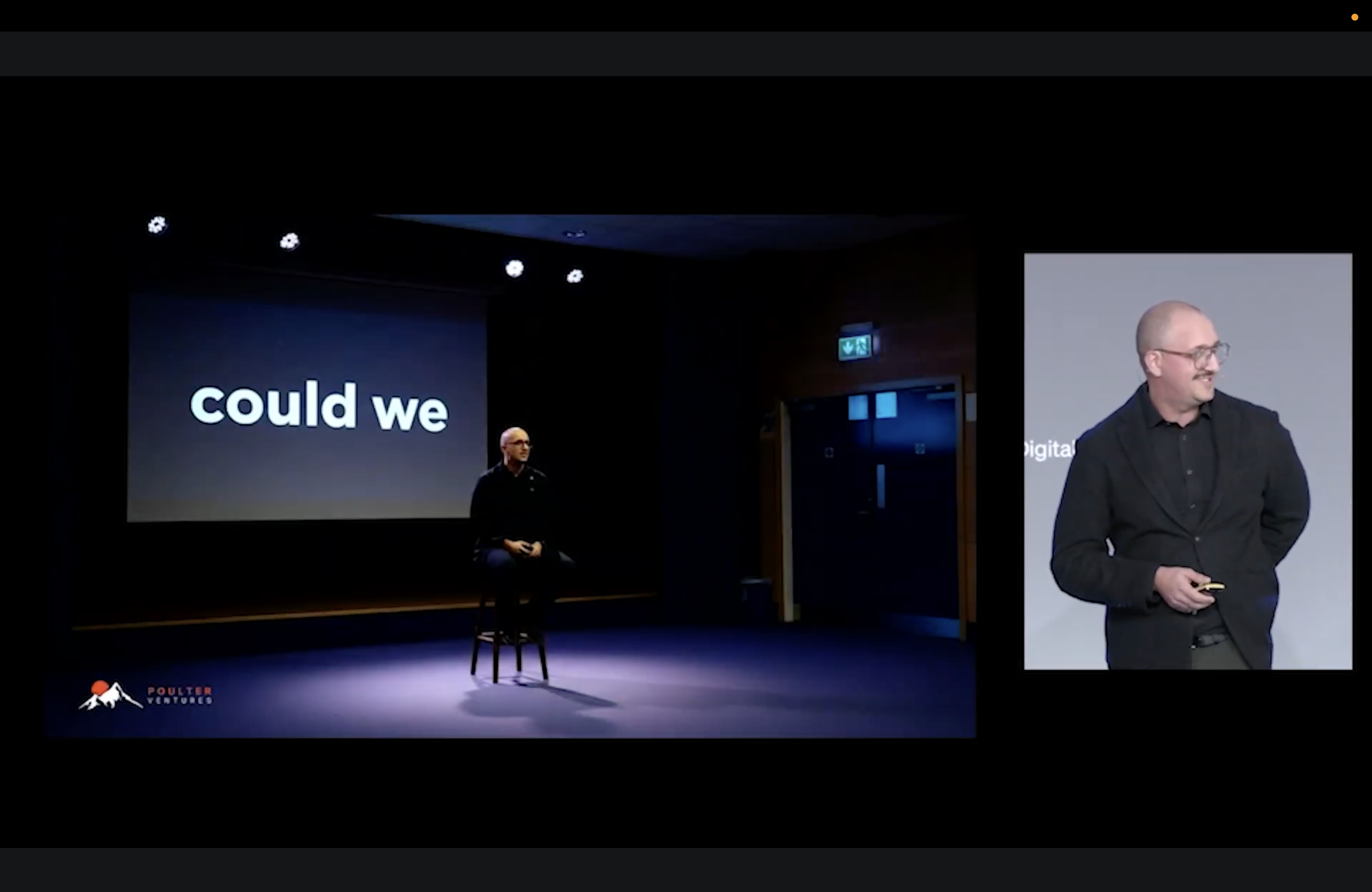
Could We, Should We, Would We?
Poulter's three-question framework offers a roadmap for organizational discernment.
Could we use AI? Yes—and we already are. A billion people use ChatGPT daily. Agentic systems are arriving. The question of possibility is settled.
Should we use AI? Yes, but with clear ethical frameworks aligned to scripture. "We should be the best users of it in the church and throughout the kingdom," Poulter argued. This requires building cultural foundations before scaling technical capabilities.
Would we use AI? The data suggests we will—personal and professional support applications are already dominant. The question is whether organizations will build the cultural maturity to use these systems well.
Culture as Ethical Infrastructure
AI readiness isn't primarily a technical challenge—it's a cultural and theological one. Organizations attempting to layer transformative technology onto unclear ethical frameworks, undocumented processes, and teams unprepared for trust transfer dynamics will struggle regardless of technical proficiency.
The encouraging news: culture work is within reach for every organization. It requires theological clarity, leadership commitment, and willingness to establish governance structures before efficiency pressures demand immediate implementation.
As AI moves from tools we use to agents that act autonomously, the window for building ethical foundations is closing. Organizations that invest in cultural readiness now don't just become AI-ready—they become change-ready, with adaptive capacity rooted in theological conviction rather than technological capability.
"We should use this," Poulter emphasized in closing. "But we need to use it with caution. We need to use it aligned to scripture and ethics. And we need to know what we're trusting and more importantly whom we are trusting, because these things are being grown, not made."
The question isn't whether your ministry can afford to build these cultural foundations. In a world where AI systems are already shaping theological interpretation, pastoral care, and spiritual formation—whether we acknowledge it or not—the question is whether you can afford not to.
Missional AI Summit 2026| SiliconValley
MAI 2026 isn't just a conference—it's a movement of Christians engaging AI as builders and leaders, not merely respondents. A movement believing technology can serve human flourishing when guided by Kingdom principles. A movement declaring: Redemptive AI isn't just possible—it's part of our calling.
Early bird registrations are now open. We'll soon share speaker lineup details, specific track descriptions, and year-round community engagement opportunities.
We hope you'll join us in Silicon Valley.