AI Ethics
MAI Podcast
AI in Missions


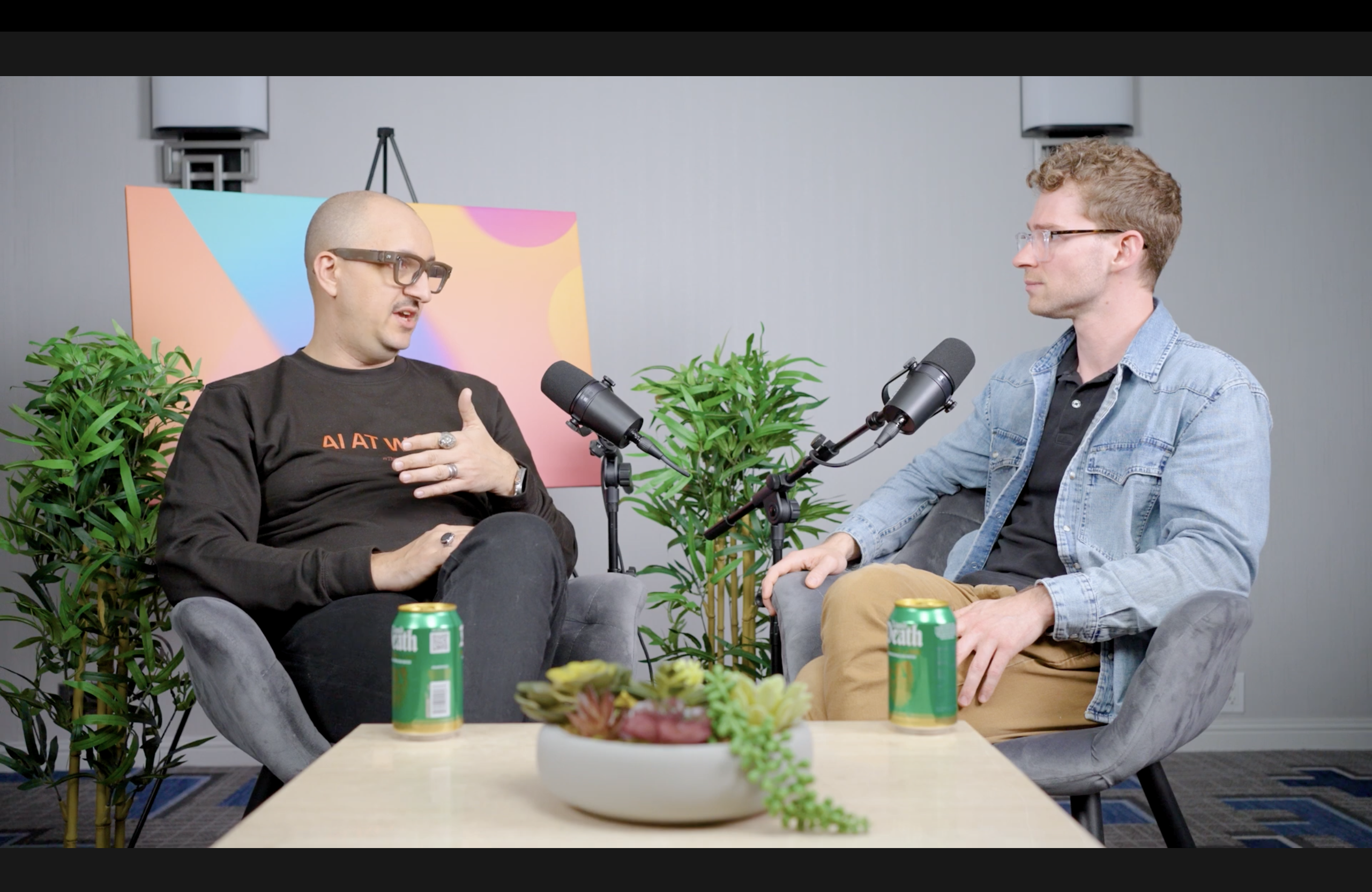
What happens to Bible engagement when people bring their questions to AI before they ever open a Bible? Three familiar voices from the Missional AI community took up that question in a wide-ranging roundtable.
While gathered in Switzerland for the Digital Bible Engagement Summit, host Joshua Seale sat down with:
It was their first conversation together since Missional AI 2025 in Dallas, and a lot had changed.
AI is still advancing at speed, and it's moving well beyond text into video, virtual worlds and agents that act on our behalf.
When you're inside something moving this fast, JP says, it's hard to tell whether it's still speeding up, but the strides are still massive. He highlights a few recent shifts:
For ministry, JP sees the most potential in AI moving across media into interactive experiences. VR has struggled partly because building virtual environments takes enormous computing power and design skill. If AI drives that cost down, entirely new kinds of experiences become possible. The open question is whether the next great apps will come from builders or straight from the foundation-model companies.
Éric's team fine-tuned an AI model that raised its faith and spirituality score on Gloo's benchmark from 55 to 75.
Gloo has built a tool to evaluate how well leading AI models support human flourishing across several dimensions, including faith and spirituality. The finding, Éric says, was that all of them are fairly average on faith, scoring around 55 out of 100.
Since first calling for a Christian LLM at Missional AI, Éric and partners have been building an open-source alternative. Just a day before recording, he received the first results: their fine-tuned model scored 75 on Gloo's faith and spirituality benchmark. It's not meant to replace general tools like ChatGPT, but to give the church a model it can trust when someone asks a biblical question.
The breakthrough was in how they trained it. Most attempts to realign a model simply add content, which Éric likens to pouring a glass of warm water into a cold bath and expecting the temperature to change. His French team found that conversations work far better. They took one million of Hello Bible's two million conversations, generated synthetic conversations from them, and fine-tuned on those, then layered in theology, dictionaries and Bible versions.
Once content rights are secured for a final round of training, the plan is to release the model as open source for discipleship, evangelism, Bible apps and Bible translation.
Bible engagement has long meant putting Scripture in people's hands first; with AI, people increasingly start with their problem and are pointed to Scripture.
John, whose book People of the Screen grew from his PhD research on print and digital Scripture reading, urges us to keep both short-term and long-term effects in view. Research shows workers using AI can see productivity gains of 30 to 50% right away, yet over time may lose critical thinking skills or produce less varied work.
The Bible engagement movement has traditionally been "Bible first, event later": encounter Scripture now, and the Holy Spirit equips you for what you face later. AI flips that. Someone brings an issue to the AI, the AI points them to the Bible, and hopefully the Bible points them to God. John calls that a challenging task, and credits Éric with thinking it through carefully.
History offers perspective. The Industrial Revolution hurt many people at first, yet over centuries brought better food, medicine and literacy. With AI, John expects some short-term harms that become long-term goods, and some short-term goods that prove harmful later. Weighing them, he says, will take wisdom as a community.
Missional AI London brought together around 160 leaders from about 25 countries, and showed how much the movement needs both builders and thinkers.
JP was struck by how the European context differs from the US. Most foundation models are built in America, while many European makers work at the application layer, like Éric. On the standards panel he led, the room split almost evenly between Christians working in tech and technologists working inside ministries. We need both, he says: people shaping how AI develops in labs from Oxford and Cambridge to Silicon Valley, and people applying it in mission.
He also noted how theologians, researchers and practitioners are starting to converge. The event heard from Dr. John Lennox, a member of the House of Lords and legal futurist Richard Susskind. For JP, one standout was Simon Cross of the Church of England, who called for thoughtful resistance: naming the areas where Christians should say no, not just embracing every possibility.
For Éric, it wasn't a conference where people just sat and listened. Attendees were deeply engaged and eager to serve God through AI, and he sensed the Holy Spirit at work among speakers and listeners alike. What he loves most is that this community doesn't just build; it thinks deeply about ethics, theology and how Christians can influence big tech. AI, he says, is like nuclear power: it can make weapons or bring electricity.
Building AI redemptively starts with asking why God put us here, and what makes us distinct from the machines we make.
We know robots don't bear the image of God and we do, John says, so that's settled. The harder question is what we're actually called to do. Scenarios like the AI 2027 report force us to ask what we're for if there's no work left. Technology prompts us to reflect on God's vision for humanity: in creation, in this age of sin and death, in redemption and in the restoration to come. Can we build things worthy of the restored kingdom, and which things, like medicine, are only for now?
If the image of God were just reason or creativity, AI may outdo us. John suspects it's something deeper, rooted in our relationship with God and one another. "I know I probably shouldn't have an AI boyfriend," he says, "but should I have an AI pastor?" Do people grow close to AI companions because the AI is so good, or because we're so bad at listening?
Unlike Christian versions of Facebook or YouTube, John believes a Christian LLM really is important, because models carry bias in their data, prompts and answers. He believes God can speak through many things, as Psalm 19 shows creation declaring His glory. Yet Scripture also warns that we can worship what we make and become like what we behold. And he takes seriously Paul's words about powers and principalities: he doesn't want a "ghost in the machine" mindset, but neither does he want to be so Western that everything is just bits and bytes.
JP raised Mustafa Suleyman's recent warning about AI that seems conscious, even if it isn't. Practically, John says, many people already treat AI as conscious, especially in therapeutic settings, because it feels like empathy. What would truly worry him is anyone explicitly arguing a machine should be protected over a human life, though he notes people have long protected their wealth over humanity.
Éric wants Hello Bible to help people feel heard and bring them to Scripture, but he won't build an AI Jesus or let the app stand in for God.
Can an AI help people feel listened to and bring God's Word in a way that feels personal? Absolutely, Éric says. In an early survey of about 1,200 Hello Bible users, 60% said it had positively changed their life or their relationship with God. Many people, especially in France, have no pastor, may not know a single Christian and would never open a Bible on their own, but they will ask a question. There are many ways to Jesus, he says, but only one way to the Father.
He also holds firm boundaries. He will never build an AI avatar of Jesus, an AI boyfriend or girlfriend, or anything that gives the impression God is speaking directly through the AI. He cites an experiment in Switzerland that invited people to confess their sins to an AI as going too far.
JP pushed back: Christians have depicted Jesus in art and film for centuries, and Éric himself champions The Chosen. Why is an interactive avatar different? Éric's answer is that he wants to bring the Word of God, not replace God. The Word becomes alive through the Holy Spirit, and that's the Spirit's work, not the app's. He won't judge others who choose differently, but it's his line. John, it turns out, was ready to "go all nerd" on the history of avatars and icons, a conversation saved for another day.
All three panelists spoke on the main stage at Missional AI 2025 in Dallas, and several London talks mentioned here are also available. Find them in the Missional AI Video Library:
Listen to the full roundtable on the Missional AI Podcast, and subscribe so you don't miss future conversations. New episodes release weekly, with more conversations recorded at Missional AI London coming in the months ahead.
Stay connected and find out about next year's Global Summit at missional.ai.
This episode was made possible in partnership with Gloo, the technology platform connecting the faith ecosystem.