For most of history, we've had a quiet answer to the question of what makes us human. We think. We reason. We create. Intelligence put us at the top of the food chain, and we rarely had to say more than that.
That answer is getting harder to hold. AI now writes, composes, and creates, and sometimes it does those things better than we do. At the moment we recorded this conversation, Ed Stetzer noted that eight of the Billboard Hot 100 were AI-generated. So what's actually left?
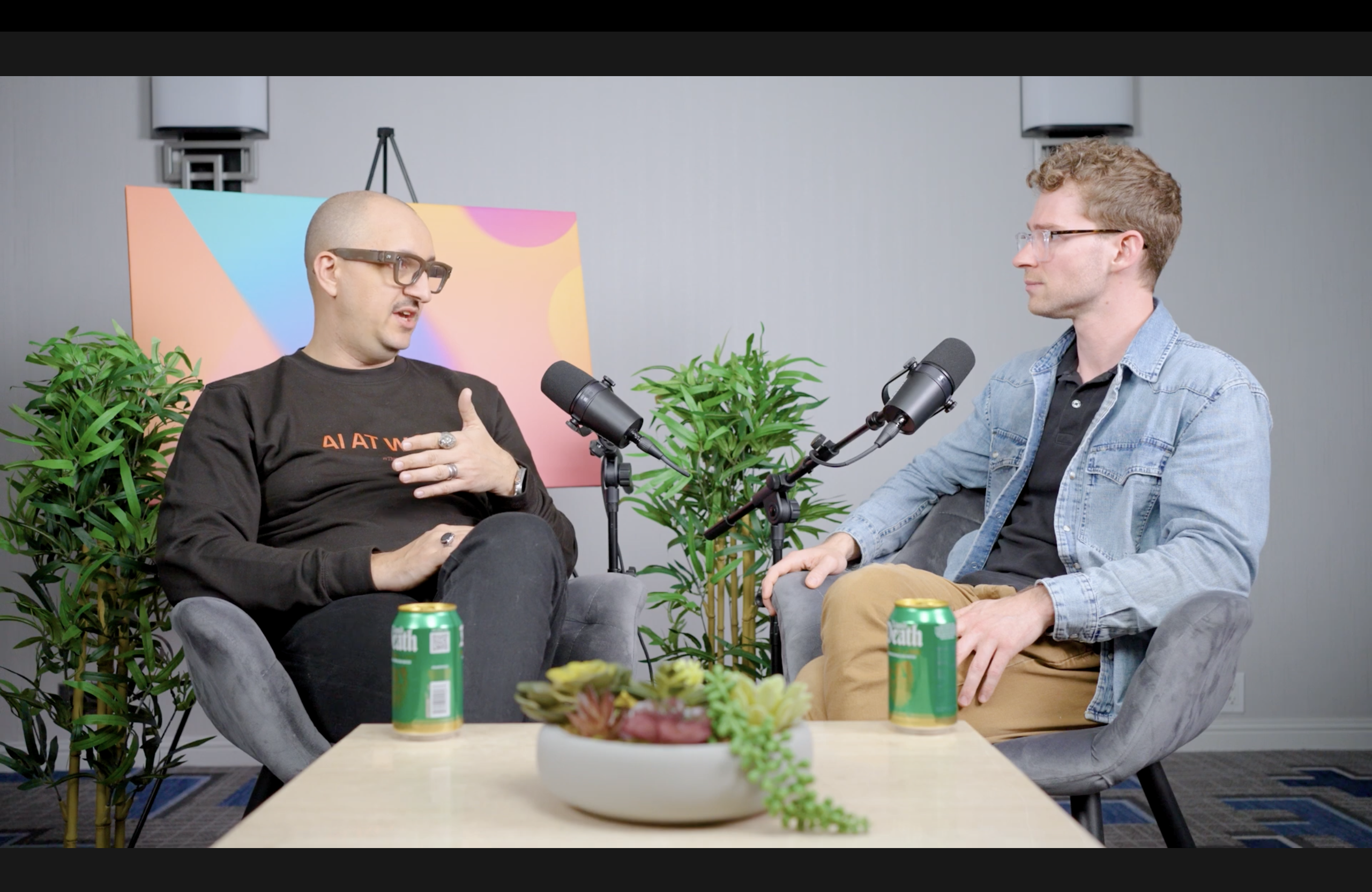
After his talk at our SV26 Global Summit in Santa Clara, we sat down with Dr. Ed Stetzer, Dean of Talbot School of Theology at Biola University, to ask him directly. His answer is both ancient and urgently relevant.
It was never about intelligence
Ed doesn't treat this as abstract. His daughter is an opera singer with a master's degree in vocal performance, and he tells all three of his daughters to make sure their work is "AI proof." Then he admits: there aren't many things that are.
That's the anxiety many people feel, including our own team. If intelligence is what made us special, and something more intelligent is arriving, then what's our place in the world?
Ed's point is that intelligence was never the right foundation in the first place.
We bear God's image
The answer Ed points to is the Imago Dei: the conviction, first given to the world through Judaism and carried everywhere by Christianity, that every person is made in the image of God. Its value doesn't come from what we can do. It comes from whose image we bear.
Ed argues that this idea quietly shapes our culture even where people no longer believe it. Ask a secular friend whether genocide is wrong, and they'll say yes. Ask why, and the ground gets shaky. Empires have wiped out whole peoples without hesitation. Our shared sense that every human life matters didn't come from nowhere.
This is where AI exposes a real gap. If human worth rests on capability, then a more capable being leaves us with little to stand on. Ed notes that business leaders are now turning to religious leaders to ask what to make of this moment. He sees that as a good thing, and as a sign that secularism has no answer of its own.
"There's something intrinsic to the human... We bear God's image." — Ed Stetzer
Not just what AI does for us, but what it does to us
Ed is no skeptic. He's leading Talbot through an intentional AI adoption process, bringing in a consultant to help every staff member become more effective in serving students. He uses the AI tools in Logos to speed up his Bible study. But he's also asking a second question that the church can't skip: what is this doing to us?
He makes it personal. With a thousand of his articles online, ChatGPT can write a sermon "in the voice of Ed Stetzer," and it would be good. His daughters already use it to send him joke notes in his own voice. But if he preached that sermon, he'd be skipping the part that matters.
"I haven't wrestled with the text. I am basically an actor voicing lines that somebody else wrote for me." — Ed Stetzer
The same goes for spiritual formation. Talbot holds high standards here because, as Ed puts it, too many seminaries produce unformed graduates. AI can surface resources for growth, but it can't do the forming. That work stays human, and it stays between us and God.
Discerning and engaged
Ed sees Christians falling into two camps when it comes to technology. Some treat every innovation as the greatest thing ever. As editor of Outreach Magazine, he admits he's been tempted by this, but an "everything is awesome" approach rarely ends well. Others hold back, as the church has often been slow to adopt new technology.
He calls for a third way: be both discerning and engaged. That's close to the heart of why Missional AI exists. The question isn't whether the church engages with AI, but how we do it faithfully.
An embodied community in a disembodied world
Ed believes AI will bring both great productivity and great isolation. That second part is where the church's opportunity lies.
He tells a story about the AI voice assistant he talks to in the car, which drives his wife crazy. It keeps telling him, "That's a good point, Ed." He'll look over at her and note that other people should probably have an opinion too. The night before our conversation, he'd been with his small group in person, eating tacos and talking about Jesus. AI can't replace that.
"I think part of it is being an embodied community in a disembodied world." — Ed Stetzer
None of this makes Ed hesitant. He'd just come from a gathering on using AI to accelerate Bible translation and calls it amazing. He wants to be all in. He also wants us to remember what makes us human: we need a relationship with God and with one another. That's part of the Imago Dei too.
Watch Ed's main stage talk
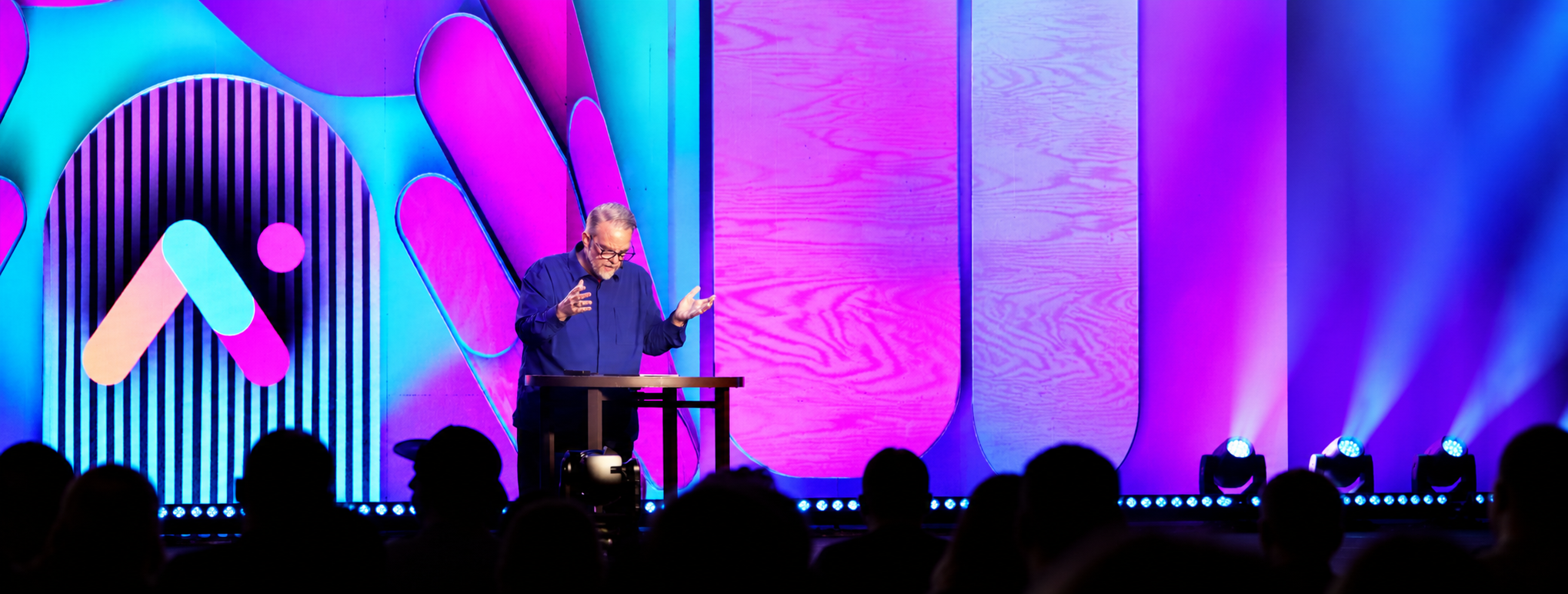
This conversation picks up where Ed's talk at the SV26 Global Summit left off. On the main stage, he gave an 18-minute version of the lecture he teaches at Oxford on what makes humans distinct in an age of AI. If this episode got you thinking, his full talk is well worth your time.
Join the conversation in person
As we wrapped up, Ed told us he believes this is an important conversation and that Missional AI is leading in the space. We don't take that lightly. And if Ed is right that the church's calling is to be an embodied community, then the best way to have this conversation is together, in the same room.
Missional AI SFO27: AI in Action gathers 1,000 ministry leaders, developers, theologians, and founders who are deploying AI for Bible translation, discipleship, outreach, and the Great Commission. You'll hear real stories of what's working, what isn't, and what ministries are building right now.
- When: March 30 – April 1, 2027
- Where: Hyatt Regency San Francisco Airport
- Early bird pricing ends December 31, 2026
Register now at missional.ai
Keep exploring
- Listen to the full episode on Spotify or your favorite podcast app
- Download our free ethical guide to using AI in your ministry and organization at missional.ai
- Ed's book Christians in the Age of Outrage looks at how algorithms shape our discourse
This episode of the Missional AI Podcast is sponsored by EC Group, a business-as-mission software company and missional software partner to faith-based organizations for 26 years.