AI Ethics
MAI Podcast
AI in Missions
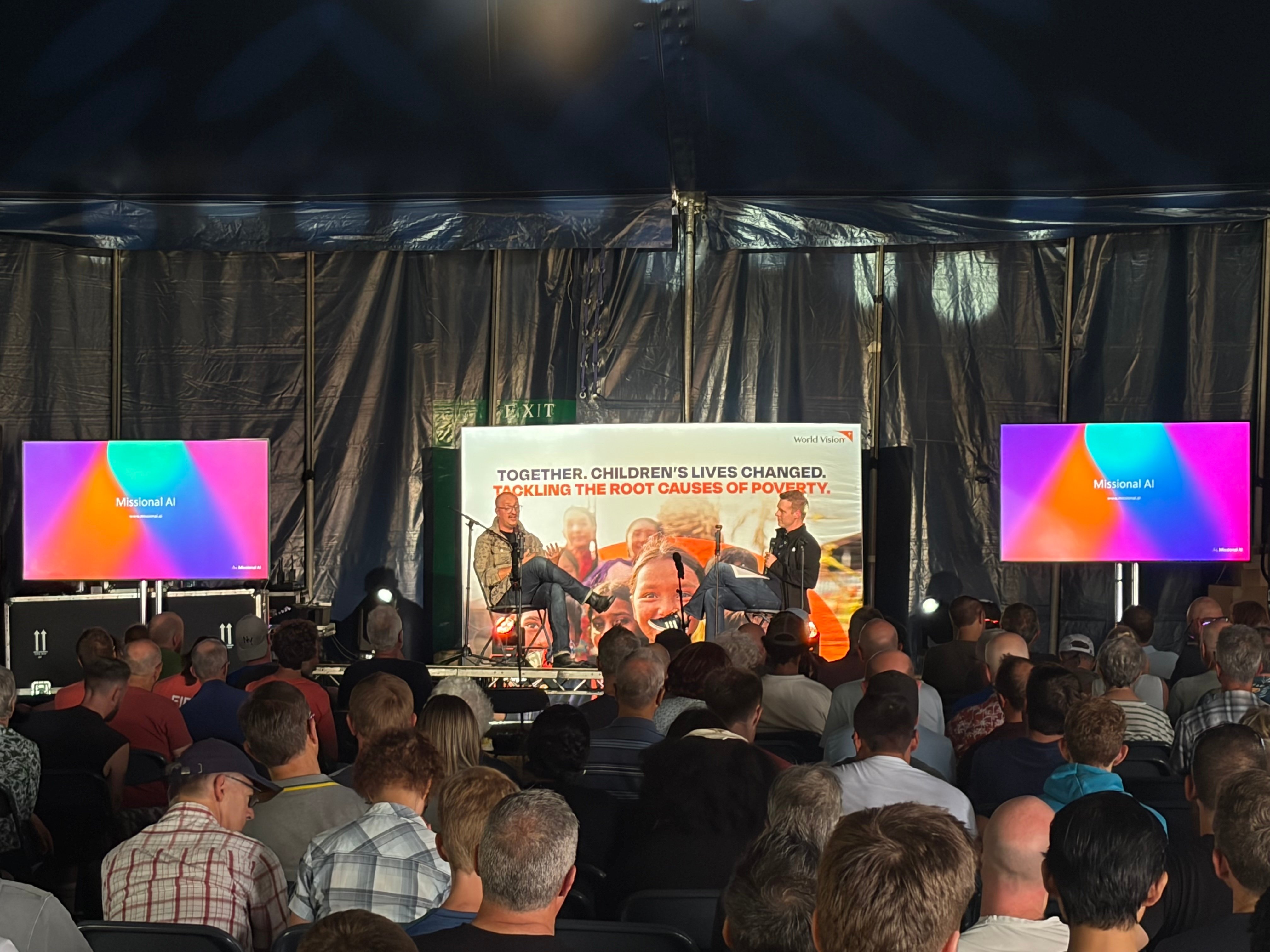

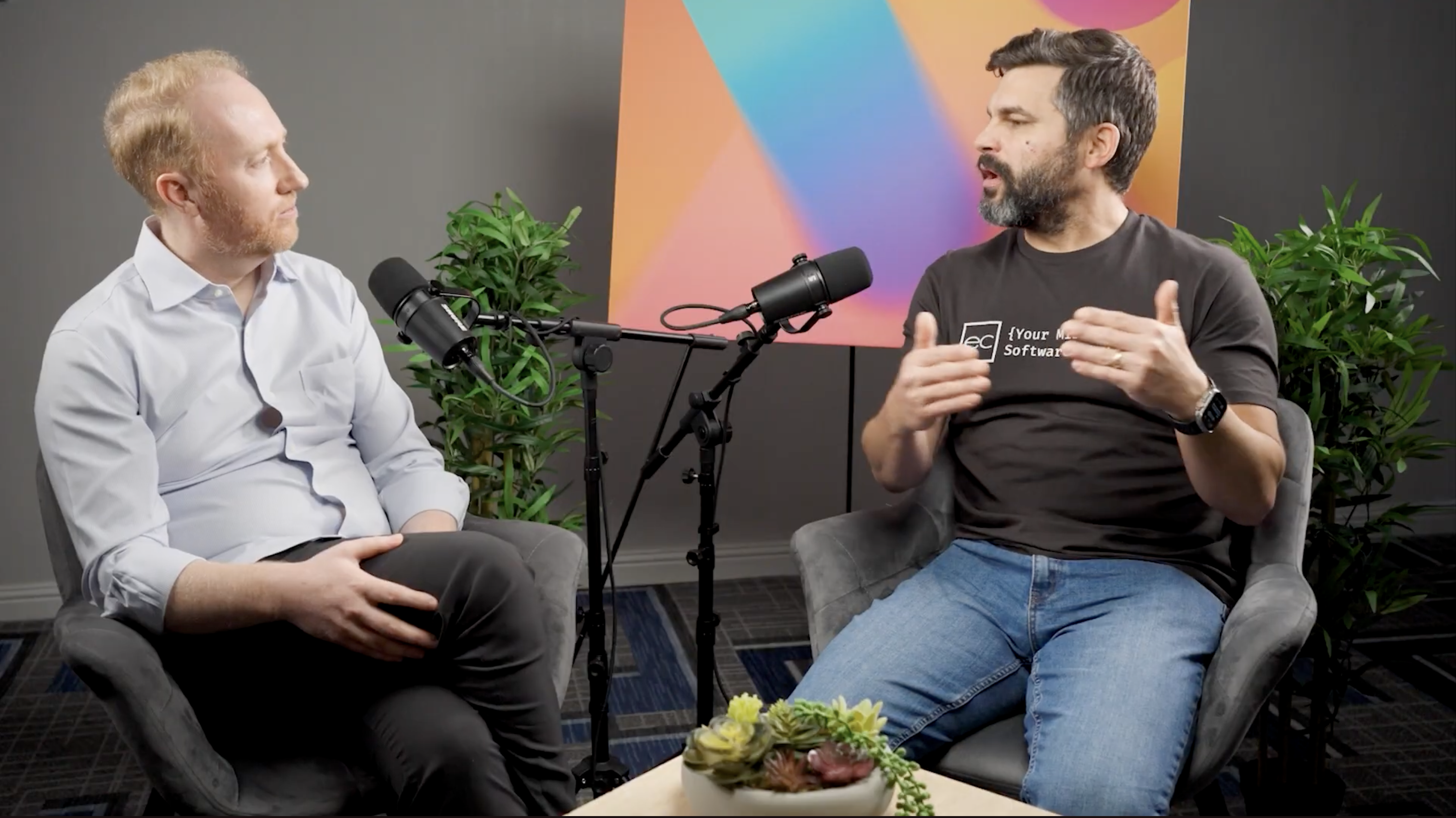
In a tent in a field at the Wildfires Festival in the UK, a room full of Christians gathered to talk about something that seems to follow us everywhere: AI. Hosted in the World Vision tent as the festival's first "lab," the session brought together two familiar voices from the Missional AI community:
Together they explored whether AI can still be controlled, what people's use of AI for therapy and companionship means for the church, the remarkable progress in Bible translation and the role the church must play for the next generation, followed by a lively Q&A.
We control how we use AI, but not how it's developed, and the choices made now may shape it for generations.
Is it too late to control this technology? "Both yes and no," JP says. Each of us controls how we use AI, and nearly everyone in the tent had used a chatbot recently. But none of us controls how it's developed, or, as JP puts it, "grown." Traditional algorithms are predictable: the same inputs give the same outputs. Today's AI models weren't assembled like Lego bricks; they were trained on vast amounts of information, more like a brain grows. Their abilities, from generating images to writing code or a Shakespearean sonnet about a dog eating a peanut butter sandwich, emerge. That's partly why they're hard to control, and why no one fully knows what they'll become capable of as they grow.
Are we near the end of this technology cycle? Far from it. A year earlier, almost everyone at similar events used ChatGPT; now many in the room use Claude, a sign the players are still shifting. "I don't think we're even at the end of the beginning," JP says. But as in any good story, the trajectory gets set early. The choices made now may shape AI for generations, and this generation may be the last to remember work before AI.
People are already turning to AI for support and companionship, which challenges the church and also reveals where it has fallen short.
We often talk as though AI is something being done to us, JP says, but each of us chooses to bring it into our lives. Research on how people use AI shows that at work, the top use is personal and professional support. In personal life, the top use is therapy and companionship.
Outside of bringing about God's kingdom, JP notes, those are among the church's core callings: welcoming the stranger, meeting people where they are and walking with them through hard times. People are turning to AI for that on a massive scale. That may say more about the failings of the church and other institutions than about AI. But it's also concerning that AI is already so good at it, because people turn to what's easy. The church will need to offer some resistance to how AI is used in these settings.
People are also using AI to study the Bible, understand who Jesus is and explore life's big questions. Some do so alongside church; others may be turning away from traditional discipleship altogether.
AI is accelerating Bible translation and putting theological resources in the hands of under-resourced pastors, especially when organizations share openly.
Joshua sees enormous kingdom potential. In December, The Economist ran a story, "Climbing the Tower of Babel," on how AI is accelerating Bible translation. Biblica still completes dozens of translations a year, mostly into minority languages. The projected date for at least a portion of Scripture in every language has moved from 2080 to 2055 to 2040, and the movement's goal of 2033 now looks possible. Things ministries wanted to do for decades can now be tried in weeks.
Biblica's Scripture apps include AI chatbots in about a dozen languages. They've had more than a million conversations, 92% of them not in English. The church in the emerging world is desperately short of theological resources, so Biblica has made its openly licensed study Bible available through these tools in languages like Hindi, Spanish and Arabic. Recently, one pastor used $50 worth of AI tokens in Biblica's account. Joshua's reaction: "Good on you, man! Please use these resources to equip yourself to lead the church."
JP notes the tension. In the UK and US, many worry about AI writing sermons, acting as pastor or doing discipleship. Yet for much of the world, a human teacher, doctor or mental health counselor is hard to find, and AI on a phone can bridge the gap. We need to examine our own worldview, biases and privilege, seeing AI's potential where help is scarce while protecting human connection. Joshua agrees: Scripture ministries have always lived with too few resources to answer people's questions at scale, and AI offers a real opportunity.
Joshua is encouraged by how open the Bible translation community has become. Biblica, best known for the NIV, aims to release 95% of its 103 translations under open licenses so builders and churches can use Scripture without costly licensing.
Would that hurt revenue? After Biblica made the shift in 2020, its organizational revenue grew by 300%, Joshua says, though he's careful not to claim one caused the other. Biblica once found it earned about $900 a year in royalties on its Kiswahili Bible; the kingdom impact of opening it up is worth far more. The English NIV will remain licensed, but about 60% of Biblica's translation portfolio is now open, and Joshua has seen more provision, not less: "God loves that generosity, and donors love that generosity."
Biblica's chatbots grew from a two-year collaboration with YouVersion, the Aquifer and SIL, each bringing different strengths. The resources now reach over 10 million people, mostly in minority languages. When organizations build together and share openly, the result is greater than the sum of its parts.
AI isn't bound by borders, so governance and public education will matter as much as the technology.
AI isn't confined to churches or bound by national governments. JP points to recent headlines, including the UK's appointment of its first cabinet-level AI minister and reports of an AI model in testing breaking out of its constraints. Predictions like the AI 2027 report, written by former OpenAI researchers including Daniel Kokotajlo and Eli Lifland, anticipated such scenarios. As AI becomes more useful, governments will be tempted to integrate it into health care, social care, energy and water systems, even though no one fully controls it.
This isn't meant to scare anyone, JP says. He's hopeful we can get it right, but there isn't much time. Some predict that by 2030 a single person could run a billion-dollar company with AI. If so, the economy, infrastructure and education will change fast. Joshua adds that it's not a question of if, but whether we're prepared to lead and stand up for what's right.
Ken Costa, an advisor to a quantum computing company and author of God at Work, compared AI to aviation, where nations accept shared rules for safety. Should we give up some sovereignty for a regulator? JP believes international cooperation is the only way to manage something this powerful, as we've done with aviation and nuclear treaties, though different regions are taking very different approaches. He also urges building sovereign AI that nations own and understand.
Joshua points to the Christian AI ethics and standards developed with Biola University, Gloo and RightNow Media, available at Missional AI, as a starting point for building not just responsibly but redemptively. He sees it as the first stage of a three-to-five-year effort.
JP's biggest concern is the lack of public information. In the UK, road deaths fell thanks to seatbelt laws, traffic calming and, most of all, public information campaigns. There's nothing comparable for AI. He urges anyone with access to people in power to push for national AI safety education.
One attendee noted research suggesting AI models tend to be more secular than the societies they serve, and that some models avoid certain political topics. What can we rely on them for?
JP notes that companies make very different strategic choices about defense and values, and only some publish the principles guiding their models. Anthropic, for example, publishes a constitution for Claude. His advice: treat AI like anything else online. Don't upload private information, and don't rely on it for major health, well-being or financial decisions.
Joshua points to Gloo's research testing major models against dimensions of human flourishing, including faith and spirituality, where most scored only about 50%. Éric Célérier's Hello Bible scored much higher. The church has an opportunity to engage, to make sound theological content more accessible and to be present where people, including many in the Middle East, are searching for Jesus.
Asked about AI from a spiritual warfare perspective, JP reflects that Christians believe God comes to us as the Word. Now there's a technology made of words, built by some who want it to be everlasting, all-knowing and eventually embodied, and who speak of "building God in a box." There is surely spiritual warfare at play, he says, though that doesn't make the tools themselves evil.
He shares an analogy from a conversation with John Lennox. A chair is a neutral tool. Hit someone with it, and it becomes a weapon. Seat someone on it and call it a throne, and it takes on a different kind of significance. The real danger is anthropomorphizing AI so much that we deify it. Whether or not AI can be conscious, if society treats it as conscious, the consequences will be profound.
Joshua echoes FaithTech founder James Kelly: "Pray before you prompt," and build redemptively with the Father's guidance.
A 23-year-old from the US shared concern that their peers rely on AI for critical thinking, and admitted to once using ChatGPT just to write a text to their mom. Others asked how churches can prepare for people seeking meaning as work changes, and how to build critical AI literacy for families. Joshua pointed to JP's book AI at Work, the Missional AI LinkedIn community and the weekly Missional AI Podcast. JP also highlighted the Build hackathon in London in October, where builders take on challenges set by major NGOs.
As AI removes entry-level work, the church and Christian business leaders must help form the next generation.
When JP asked how many attendees' churches had a workplace ministry, very few hands went up. Yet the next decade will require churches to pray for, re-equip and retrain people who lose work to AI. The next five years, he warns, will be especially hard for young people entering the workforce.
Entry-level administrative work has always given young people economic value and a reason to be around others, learning how to operate in the world and building character. When it no longer makes economic sense to hire them, where will they go? JP believes the church must help, showing young people what it means to lead, to think strategically, to be deeply empathetic and to understand culture.
He also challenges Christian business leaders to invest in young people even when it doesn't make immediate economic sense, so their formation is secured for the next generation. Most Christians live out their faith in the marketplace, he notes, and if it fails, the church will face even bigger problems.
JP closed the session in prayer, thanking God for what He is doing through AI while asking that we always see it as artificial, not a replacement for God or for one another. He prayed for technologists, business leaders, parents, creatives and educators to have discernment, and for strong Christian leaders to rise up in places of influence like Silicon Valley, London, Hyderabad, Singapore and Shanghai, so that God's kingdom would come and His will be done.
Missional AI heads back to San Francisco for SFO27, March 30–April 1, 2027. Early-bird registration is open now at missional.ai, with early access to the hotel block. Missional AI London will also return next July. We'd love to see you there.