What if the most dangerous thing about AI isn't that it's too powerful, but that we're asking the wrong questions about it? As the faith community debates whether to embrace or resist AI, Maria Luciana Axente points to a more urgent conversation: not whether AI will surpass us, but how we'll adapt to it with wisdom.
Maria is founder of Responsible Intelligence and one of Europe's leading voices on responsible AI. Over the past decade, she pioneered responsible AI at PwC, advising organizations as diverse as UNICEF, NATO and UK public bodies on deploying AI safely, ethically and beneficially. For Maria, it's a calling, not just a career. She had long prayed for work that aligned with her purpose, and she credits God with putting her on this path and opening doors she never imagined.
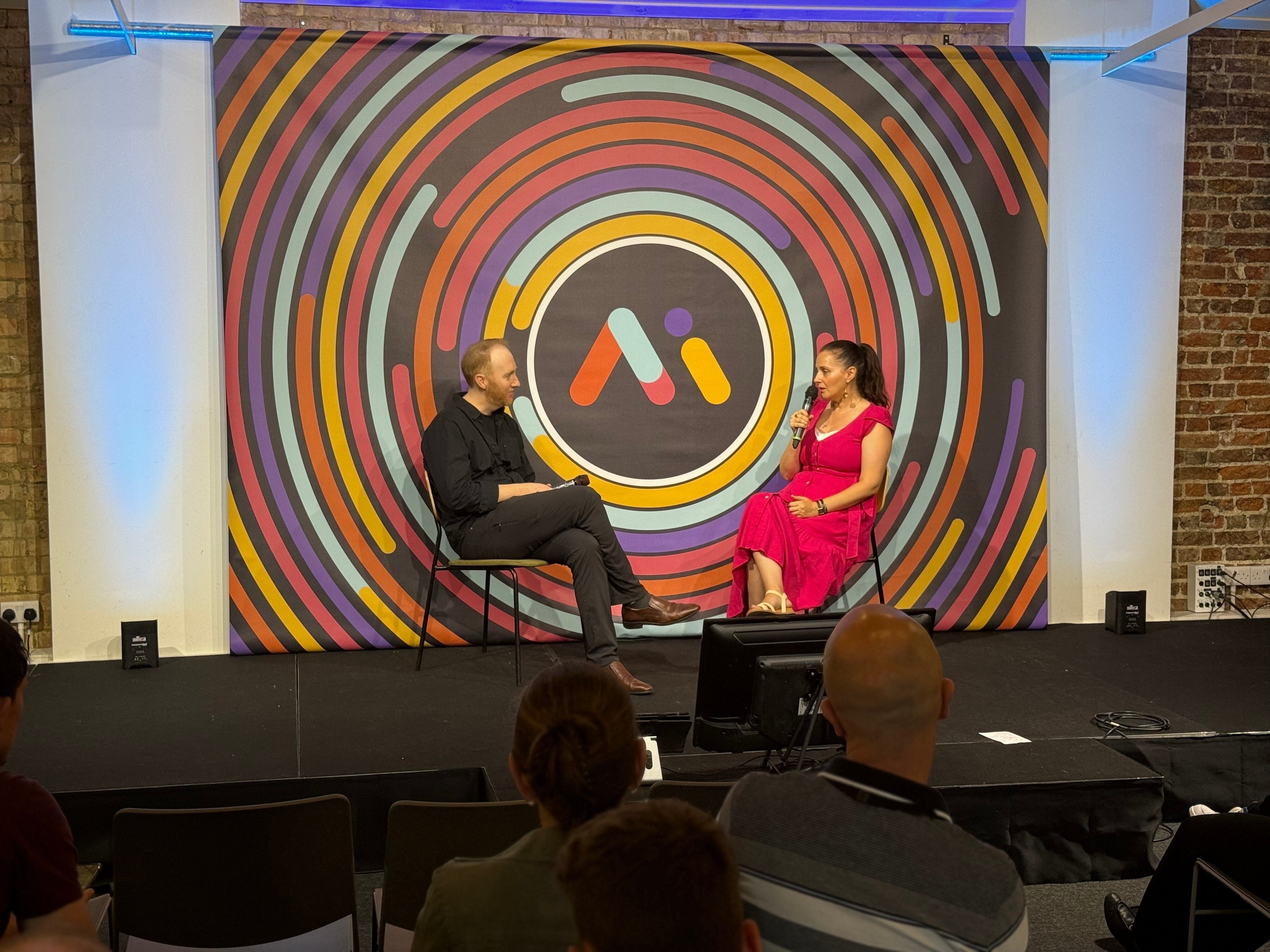
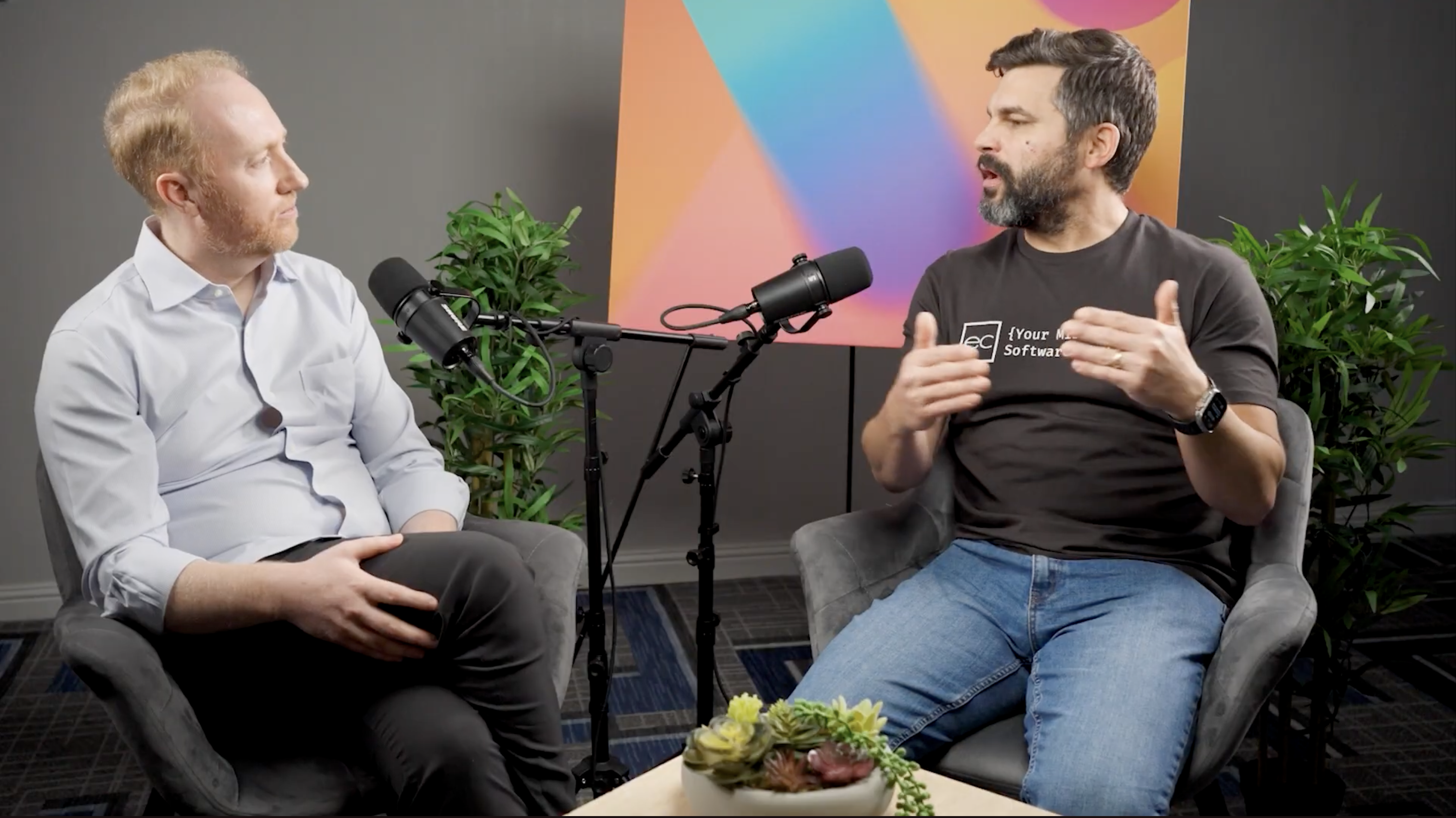
We sat down with Maria at Missional AI London 2025, after her talk on the main stage.
What is responsible AI?
Responsible AI is a set of tools and techniques for staying in control of AI, anticipating its harms and deciding when it's the right solution at all.
When Maria and her colleagues began, no one quite knew what "responsible" meant for AI. Early projects revealed that AI comes "with strings attached": bias that leads to discrimination, behavior that's hard to control and risk management approaches that weren't fit for purpose. AI is unusual technology. It's probabilistic, has a kind of agency, shapes its environment and increasingly operates without human intervention.
Responsible AI grew from those lessons, starting with governance and adding layers over time. At its core, it helps organizations stay in control when AI malfunctions, know how to put things right, and recognize and address negative impacts early. It also means asking whether AI is the right answer. "Just because AI is a glamorous technology doesn't mean it's the answer to every question we have." At its simplest, Maria says, responsible AI is common sense about what could go wrong.
A human adaptation problem
The real challenge ahead isn't technical, Maria argues. It's how humans adapt to a world where AI can do many cognitive tasks better than we can.
Asked whether we can control AI as it approaches AGI, Maria reframes the question. The debate reveals how little we understand human intelligence itself; there's no universal definition. She recalls Nvidia's Jensen Huang distinguishing two kinds of AGI: an "engineering" AGI that crunches vast amounts of data, and the intelligence that is intrinsically human and can't be replicated. What's being pursued is the former.
Comparing ourselves to AI also misses something, she says. We measure individual intelligence, but AI offers aggregated intelligence that mimics some of our cognitive and interpersonal abilities. Her analogy is flight. Humans long dreamed of flying like birds, with wings like Icarus. Today we do fly, not as individuals flapping wings, but collectively in aircraft. We need to rethink AI in similarly new terms, rather than jumping straight to visions of a superintelligence wiping out humanity.
Existential risks are real and being worked on. But individually, the task is to learn how to interact with AI to maximize our potential and thrive as more tasks become digitized. Her advice: delegate the most boring work to machines, and keep the fun stuff, the creative, interpersonal and exploratory, "whatever makes life worth living."
Between hype and fear
The AI conversation has swung from utopian promises to doom, and Maria hopes it settles on something more balanced: real risks and real benefits, addressed together.
Maria understands why some fear-mongering became necessary, but the reality is more nuanced. On one side, Silicon Valley spent decades moving fast with no regulation, and we're still picking up what it broke. On the other, we shouldn't become so paralyzed by fear that we hand our agency to a select few who claim they alone can control AI. "We need many eyes on deck."
She points to aviation. Do you ever wonder whether your plane is safe before boarding? Rarely, because a whole ecosystem of largely invisible safety measures keeps flying safe. She hopes the AI industry will build something similar.
At the same time, individuals need to experiment and reflect. Is it wise to let ChatGPT write everything for you, if your own ability to reason and write will decline? Both must happen in parallel: industry-wide safety nets, and thoughtful experimentation at home to see the consequences of relying on AI too much or too little.
Brake or engine?
Many innovators see responsible AI as friction. Maria sees it as what turns a sputtering engine into a high-performance one.
This question is central to her new company, Responsible Intelligence. At PwC, her work focused on risk: AI carries risks that must be addressed throughout its lifecycle. Large organizations now do much of that routinely. The next challenge is helping organizations build and adopt AI in ways that accelerate growth while anticipating and clearing hurdles.
Startup founders often worry that rules will stifle innovation. But Maria points out that society already depends on safety rules, and they form the boundaries for all innovation. You can't "break the world," even in the small corners where your tool is deployed. Science pushes boundaries all the time, but you need to recognize early when pushing them could cost lives or cause unacceptable harm.
Thinking early about these issues helps you grow faster and safer. Take healthcare: it's highly regulated, and rules differ from country to country. A tool meant for global rollout must account for both regulations and ethical issues in each market, whether the UK or Kenya, or it won't be accepted.
That's why Maria believes responsible AI can turn "a Trabant engine into a Ferrari engine": it's a competitive advantage.
What the faith community can bring
Pray, apply Christian common sense and engage with AI intentionally, within the boundaries of faith.
First, Maria says, pray. She was encouraged that so many sessions at the summit highlighted the need for Christians to pray, not only for their own work but for the people building AI in companies across the industry. She recently spoke with someone who left a big tech company because it was so hard to be a Christian there, a company that builds and deploys a great deal of AI.
Second, bring common sense. Christians don't need to reinvent the wheel. "We know who's in control of this world," and He guides us if we let Him. That means a balanced approach to how we read the news and think about AI, pushing back on harmful narratives, simplifying where we can and experimenting with an open mind, within the boundaries of our faith.
She also flags a real concern: AI can be used to codify values that are anti-Christian. So Christians should be intentional and mindful in how they use AI, not only in daily life but in how their organizations solve problems.
Watch Maria's talk from Missional AI London
Maria also spoke on the main stage at Missional AI London 2025. You can watch her talk in the Missional AI Video Library under London 2025, or in the London 2025 playlist on YouTube.
Listen and join the conversation
Listen to the full episode with Maria Luciana Axente on the Missional AI Podcast, and subscribe so you don't miss future conversations.
The Missional AI 2026 Global Summit takes place April 7–9, 2026, in Santa Clara, California, the largest gathering of Christians working at the intersection of faith and AI. We expect it to sell out soon, so get your ticket now at missional.ai.
This episode was made possible in partnership with Gloo, the technology platform connecting the faith ecosystem.