You may have seen the CV logo or the name Christian Vision, but few people know what's happening under the hood. Since 1988, CV has used technology for mission at scale, from shortwave radio to FM to today's digital frontier. Yet it isn't a tech company. It's an evangelism ministry that uses technology in ways it was never quite designed for.
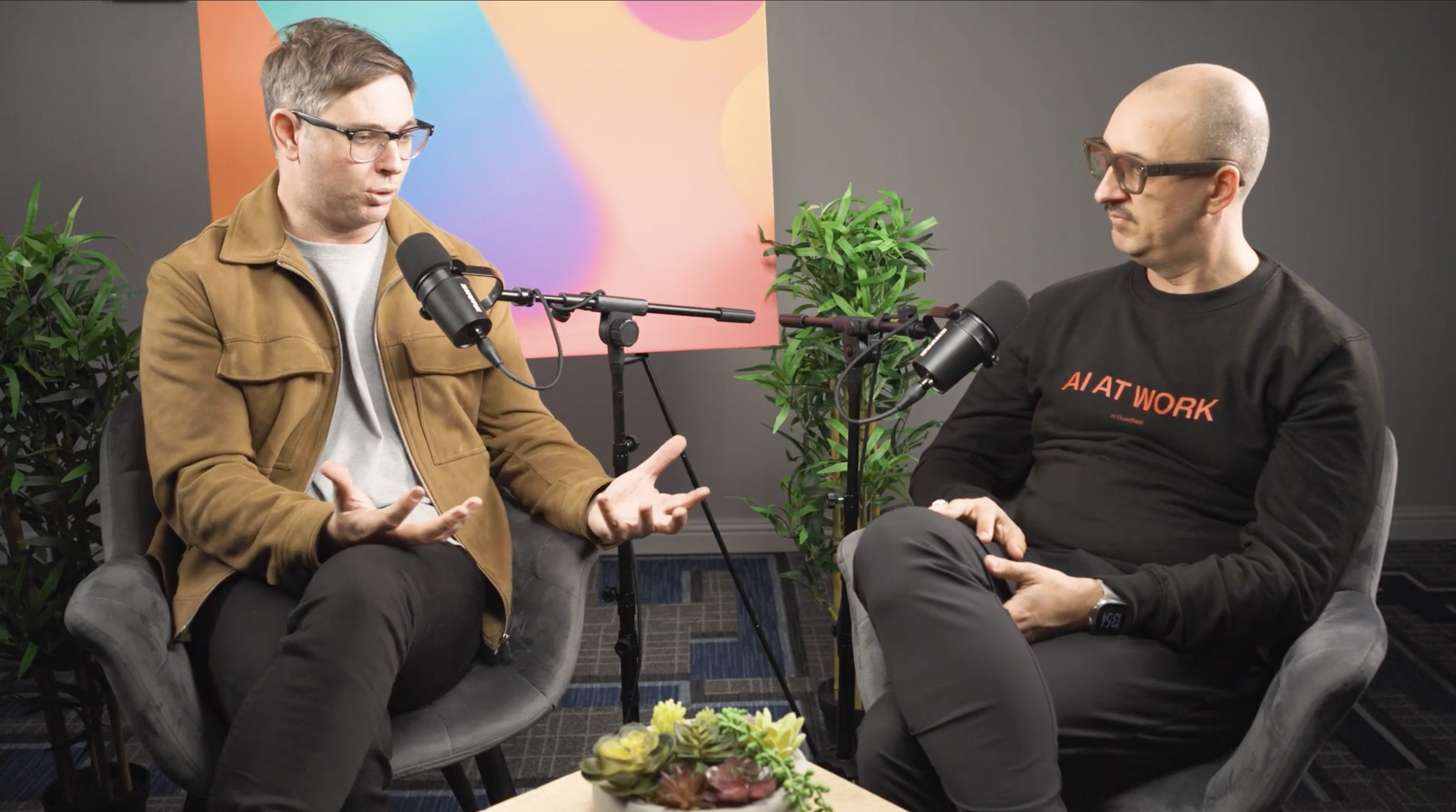
In this episode, recorded at the Missional AI 2026 Global Summit in Silicon Valley, James Poulter (JP) sits down with Nick Parker of CV, a longtime Missional AI partner, to talk about translation for unreached people groups, AI companions where there's no church on the ground and the question Nick keeps coming back to: just because we can, should we?
An evangelism ministry, not a tech company
CV uses existing technologies in innovative ways to reach people at scale, and it stays ahead of what's coming so it can "mission-proof the future."
CV has been part of Missional AI since its early days on Zoom during COVID. Registered as a charity in the UK, its mission has always been to introduce people to Jesus and encourage them to become His true followers. It has done that by leveraging technology at scale: shortwave radio in the late 1980s and early 1990s, then FM, and for the last 13 years, digital.
CV is also intentional about understanding what's coming in five or ten years, so it can, in Nick's words, "mission-proof the future." But he's quick to correct a common misconception. People have called CV a content hub, a venture capital firm and a tech company. It's none of those. "We're an evangelism ministry, and we just use technology," he says. CV doesn't usually build proprietary technology; it uses existing tools in innovative ways, often beyond what they were designed for.
That's why Missional AI matters to CV. AI is here, it's not going away and it's accelerating the work of mission. Being in the room with people pioneering these technologies is essential.
Translation and content for 500 languages
AI is helping CV create and translate content at a scale that would otherwise be financially impossible.
On the mission side, AI is helping CV most with content creation and translation. CV has an ambitious goal: to work in about 500 languages, mostly spoken by unreached people groups. It currently works in 50 to 70 and hopes to reach 500 over the next four years. The only way to get there is through AI translation.
Because CV works at scale, producing fresh content every day across many languages and cultures would require massive teams, which isn't financially sustainable. AI makes it possible.
Inside the organization, CV is still early in its AI journey. After a major restructure, it wants to understand how the new structure will function before deploying AI widely, though it's actively exploring deploying AI agents across the organization.
Personally, Nick, whose interests range from Formula One and rugby to hardcore music and photography, describes himself as naturally curious. He uses tools like ChatGPT and Gemini to explore ideas and found ChatGPT especially helpful as a study assistant during an online advanced project management course. He uses AI less than many people, he says, and keeps a healthy skepticism, but for research and learning, it's been phenomenal.
Just because we can, should we?
CV is wrestling with the ethics of AI in evangelism, and finding it most valuable where there's no church on the ground.
CV could deploy AI chatbots to respond to many of the people who reach out. But that raises hard questions. If a bot hallucinates 1% of the time, are we comfortable with that? Can someone really be introduced to Jesus through a chatbot?
Where Nick sees AI as most valuable is in places with severe persecution, where it's hard for people to find someone to disciple or mentor them. In Somalia, for example, CV can't have people on the ground, and there's no established church. Some may question using AI there, but CV's view is that at least it's offering something: a way for people to ask their questions and get answers.
Is there a framework for where to draw the line? These are active conversations, Nick says, including with CV's founder, Bob, his wife, Tracy, and the executive team. There's a constant tension between Silicon Valley's "move fast and break things" and ministry, where "those things are people." CV wants to be confident something does what it's meant to before launching it, and it seeks counsel from trusted advisors. One question from Missional AI has stuck with Nick ever since: just because we can, should we?
Digital Day: bringing technologists and the church together
CV's annual Digital Day in London bridges the gap between people building technology and the churches and ministries it could serve.
That question, "just because we can, should we?", was also the theme of JP's talk at CV's Digital Day. CV started the event because it saw a big disconnect between technologists and the church. Digital Day invites technologists to share what they're building while pastors and mission organizations hear practical applications.
One of the best side effects is the conversations it sparks. It's rare to see a technologist in the same room as an Anglican priest, Nick says, but at Digital Day it happens naturally. A technologist might realize they've been solving a problem without ever asking a pastor, and the pastor can explain whether it's a real problem or what to keep in mind.
CV describes digital as the intersection of innovation and mission. It has never run Digital Day as a CV-branded showcase; the goal is to highlight great mission work happening through technology around the world and to take the church on that journey. Digital Day usually takes place in London in the first or second week of November, often on a Thursday.
Mission without borders
Mission is no longer bound by geography. Some of today's unreached communities are inside games and online forums.
What excites Nick most about the future is that mission is no longer locked to geography. For years, mission strategy followed the same geographic models. Now there are monocultures and subcultures online, and you can have an effective mission strategy entirely in Roblox, engaging kids around the gospel across the world through a game in ways that were never possible before.
CV is going through its own renewing of the mind, rethinking what it means to reach unreached people groups and what evangelism looks like. There are subreddits, kids in Roblox and Minecraft, and players in Fortnite. Imagine a child who's never heard the gospel encountering it, and coming to faith, in a space once seen as off limits. Nick wishes more people would prioritize this kind of mission.
Get connected
- Learn more about CV: visit cvglobal.co or find CV on social media at @cvglobal.
- Join Digital Day: CV's annual event in London each November. Watch CV's channels for registration.
- Use AI ethically in ministry: download Missional AI's free ethical guide to using AI in your ministry and organization at missional.ai.
- Read more: JP's talk on AI ethics from Digital Day is also available as an earlier episode and blog post, "The Ethics of AI: Could We, Should We, Would We?"
Join us in San Francisco
Listen to the full episode on the Missional AI Podcast. Missional AI heads back to San Francisco for SFO27, March 30–April 1, 2027. Early-bird registration is open now, with early access to the hotel block. Get your ticket at missional.ai.