Missional AI London 2026: Staying Human, Building Well
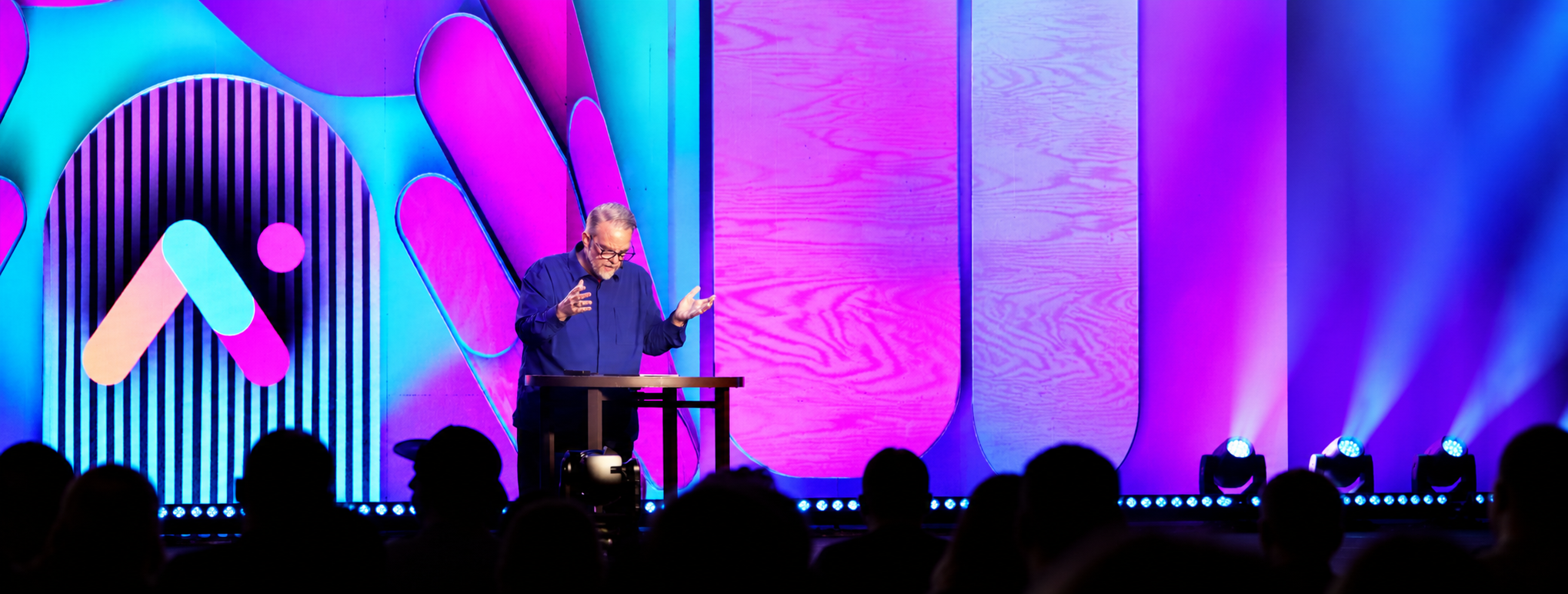
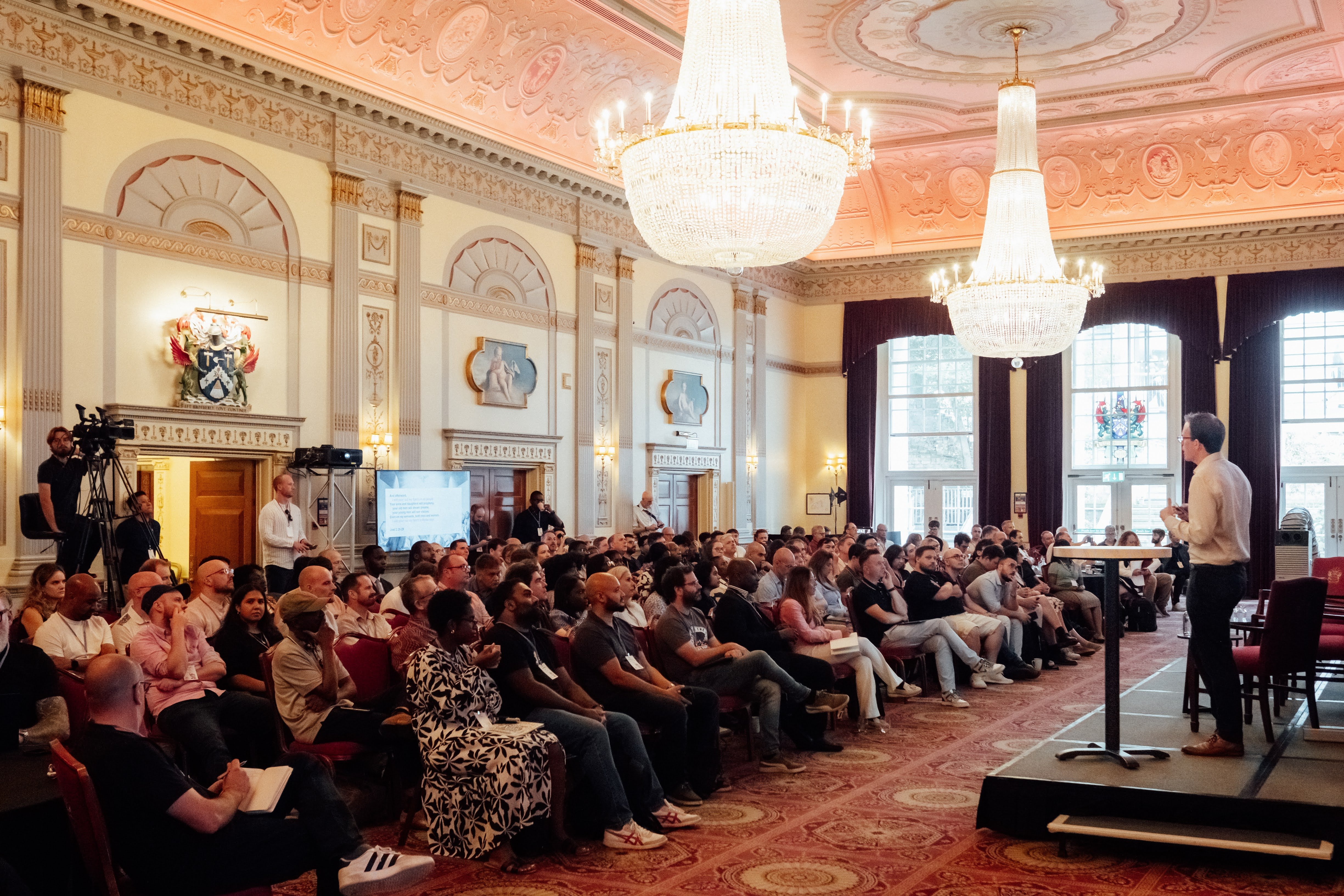
On July 17, 240 people gathered at Plaisterers' Hall in the City of London for Missional AI London 2026. Ministry leaders, technologists, fundraisers and creatives spent the day on one shared question: how do we use AI faithfully, building well and telling the story well, without losing what makes us human?
Below are some of the talks that shaped the day. We will add more sessions here as the recordings are released.
Seeing Again: Staying Human in the Age of AI
Chine McDonald, Director, Theos
Chine opened the day with a reflection on E. M. Forster's 1909 story The Machine Stops, in which people live isolated lives serving an all-powerful machine. Forster's fear was not that machines would become human, but that humans would become machine-like.
Her answer was a commitment to seeing. AI can be missional, she argued, if it helps us see creation, see each other and see the God who sees us. Genesis shows a God who pauses to behold what he has made, so the church's gift in this moment may be contemplation rather than more production. Drawing on Martin Buber, she warned that the danger is not talking to an "it" but treating people as its: users, metrics and profiles. And she closed with Hagar, who named God El Roi, "the God who sees me": a kind of being seen that no AI memory can offer.
Five Fingers and a Hand: Building a Missional AI Product
Eric Célérier, founder of TopChrétien and Hello Bible, co-founder of Jesus.net
Eric set aside his slides and turned the room into a workshop, using his own hand as the framework. Every AI product needs five fingers: the product, the technology, a sustainable economic model, marketing and communication, and two-way partnerships. He told the story of Hello Bible, an AI Bible companion he first imagined 17 years ago and could only build once generative AI arrived.
The fingers only work as part of a hand, which is the team, and the hand needs a purpose. Hello Bible's labs are exploring AI-generated Bible podcasts, a research knowledge graph of 1.7 million pieces of content, and AI-assisted translation, including a test that drafted a full Luxembourgish Bible in three and a half hours as a tool for human translators. Through it all, Eric was clear: AI does not replace the Holy Spirit, the pastor or the church. The goal is to bring people closer to God, not closer to the app.
Algorithms and the Holy Spirit: Creating in the Age of AI
Kevin Bennett, Premier Christian Media
Premier has been an early adopter for years, from streaming radio to rolling out ChatGPT across the organisation in early 2023. Kevin asked whether we are making a category error about AI. It is prediction built on mathematics, and he suggested "simulated intelligence" is a better name than "artificial". A simulation is useful, but it is not of the same order as what it imitates, and it is not consciousness.
For creative work, he argued AI belongs in the middle. Let it lead the ideas and you get sameness; let it finish the work and you get slop. Used as an accelerator between human inspiration and human responsibility, it brings real benefits. And since AI can now copy almost any product overnight, lasting value comes from what it cannot commoditise: relationships, brand, intellectual depth and spiritual calling. His closing line summed up the day: AI has algorithms, but you have the Holy Spirit.
Prophet, Priest and King: How Christians Can Respond to the AI Moment
Paul Taylor, co-founder, Bay Area Center for Faith, Work and Tech
Paul has pastored in Palo Alto for nearly 20 years, discipling many of the people who build today’s technology. He began with the opening verse of Haggai, where a prophet, a governor and a high priest stand together as God calls his people to rebuild the temple. Paul argued that the church needs people in all three roles. Kings use their influence to shape culture for good, and AI labs, businesses and movements like Missional AI all work in that space. Prophets stand outside the system and ask the hard questions about work, loneliness and human flourishing, even when no one listens. Priests help people find God as the world changes around them.
Paul sees the priestly role as the church’s greatest opportunity. As AI becomes more human-like, our culture is being forced to ask what it means to be human, and that question leads to Jesus. To help people explore it, Paul introduced his Four AI framework of Awe, Agency, Identity and Intimacy. These are four postures rooted in our relationships with God, creation, ourselves and others, and they offer a way to test whether a technology is forming us or deforming us. He closed with the ancient idea of Christ as prophet, priest and king. His optimism, he said, rests not on the technology but on the fact that Jesus created the church for moments like this.
Telling the Story, Funding the Work: AI and the Giving Gap
Panel: Daniel Jones (Stewardship, moderator), Luke Wilkinson (Razor), Antonio (Christian Aid), Kit Powney (Tearfund)
Stewardship estimates that UK Christian causes receive about £2 billion a year, while giving at a tithe would be closer to £7 billion. This panel asked whether AI can help close that giving gap. The answers were honest: even large charities are taking small, careful steps, with policies still being written and a human always in control.
The opportunities are real. Christian Aid cut prospect research from five hours to fifteen minutes. For small charities, where nobody fundraises full time, AI can create capacity they could never pay for. But Luke warned that AI-written grant bids have flooded funders, with some seeing up to four times as many applications, so the advantage disappears fast. The panel's shared advice: start with a real problem, test small, protect your authentic voice, and use AI to do your work better, not just faster.
Bonus: The Missional AI Podcast, Live from Premier
Inside Anthropic's Faith Convenings: What Silicon Valley Wants from the Church
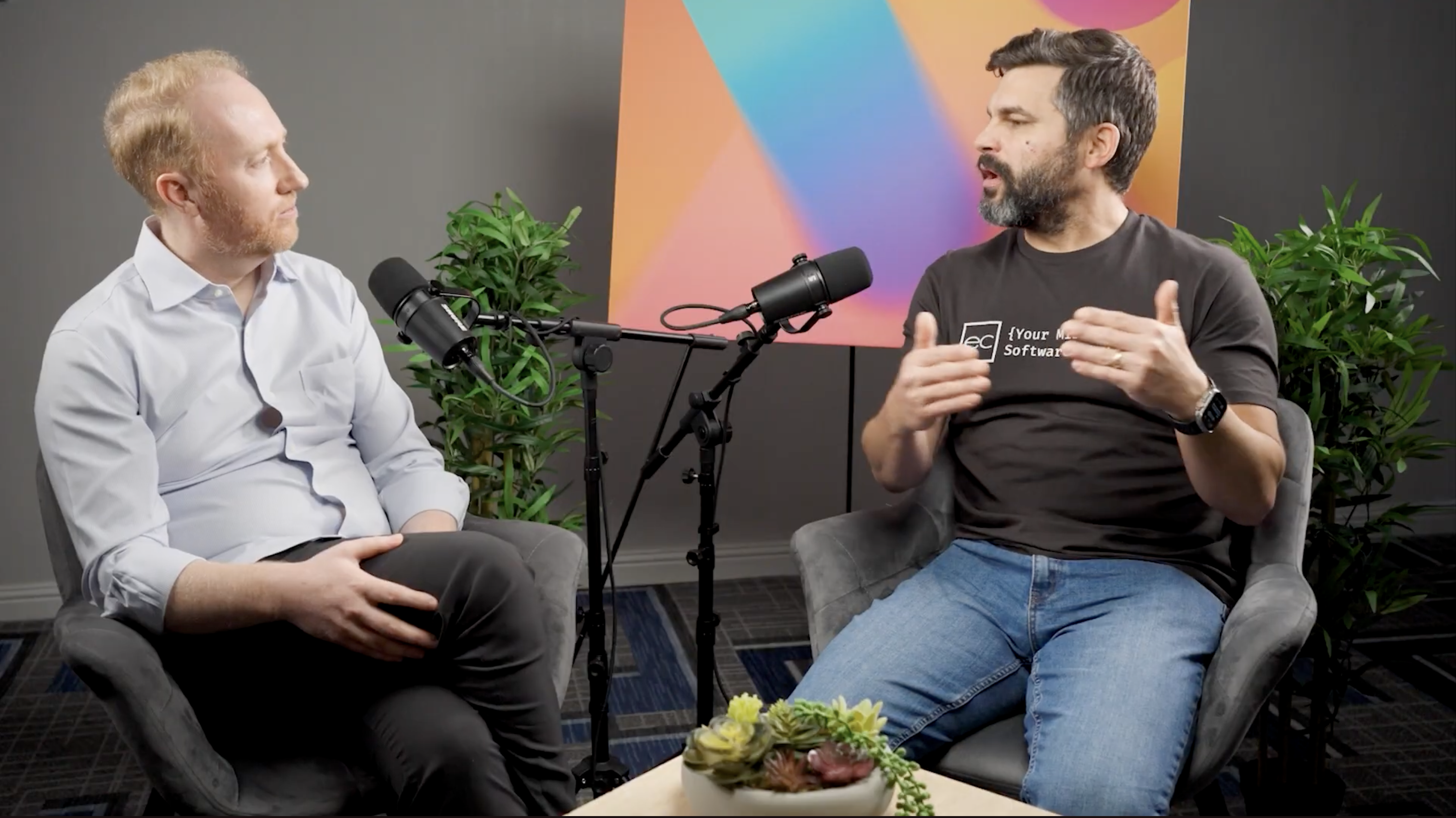
On the eve of the summit, we recorded a special episode of the Missional AI Podcast at Premier Christian Media's studios in Central London, with our first-ever live studio audience. Host James Poulter was joined by Paul Taylor, a former Palo Alto pastor now working at the intersection of faith, work and tech in Silicon Valley; Gareth Russell of Jersey Road; and Kit Powney of Tearfund.
Paul shared what it was like to take part in Anthropic's convenings with faith leaders, where the posture was one of openness and a desire to share the weight of what is being built. The panel went on to discuss why AI needs faith conversations in a way earlier technologies did not, how churches can make sure technology serves their mission rather than becoming it, the new pastoral questions AI is raising, and how to close the AI gap between the Global North and Africa. Audience questions, including from Premier's Kevin Bennett and Biblica's Chante, made it a truly live conversation.
Join Us in Silicon Valley
The common thread across the day was simple: be pro-technology, but always pro-human. AI is a remarkable tool, and the church has a calling to shape how it is used.
The conversation continues at the Missional AI 2027 Global Summit, March 30 to April 1, 2027, at the Hyatt Regency SFO. Early-bird registration is open now at missional.ai.