AI Ethics
MAI Podcast
AI in Missions


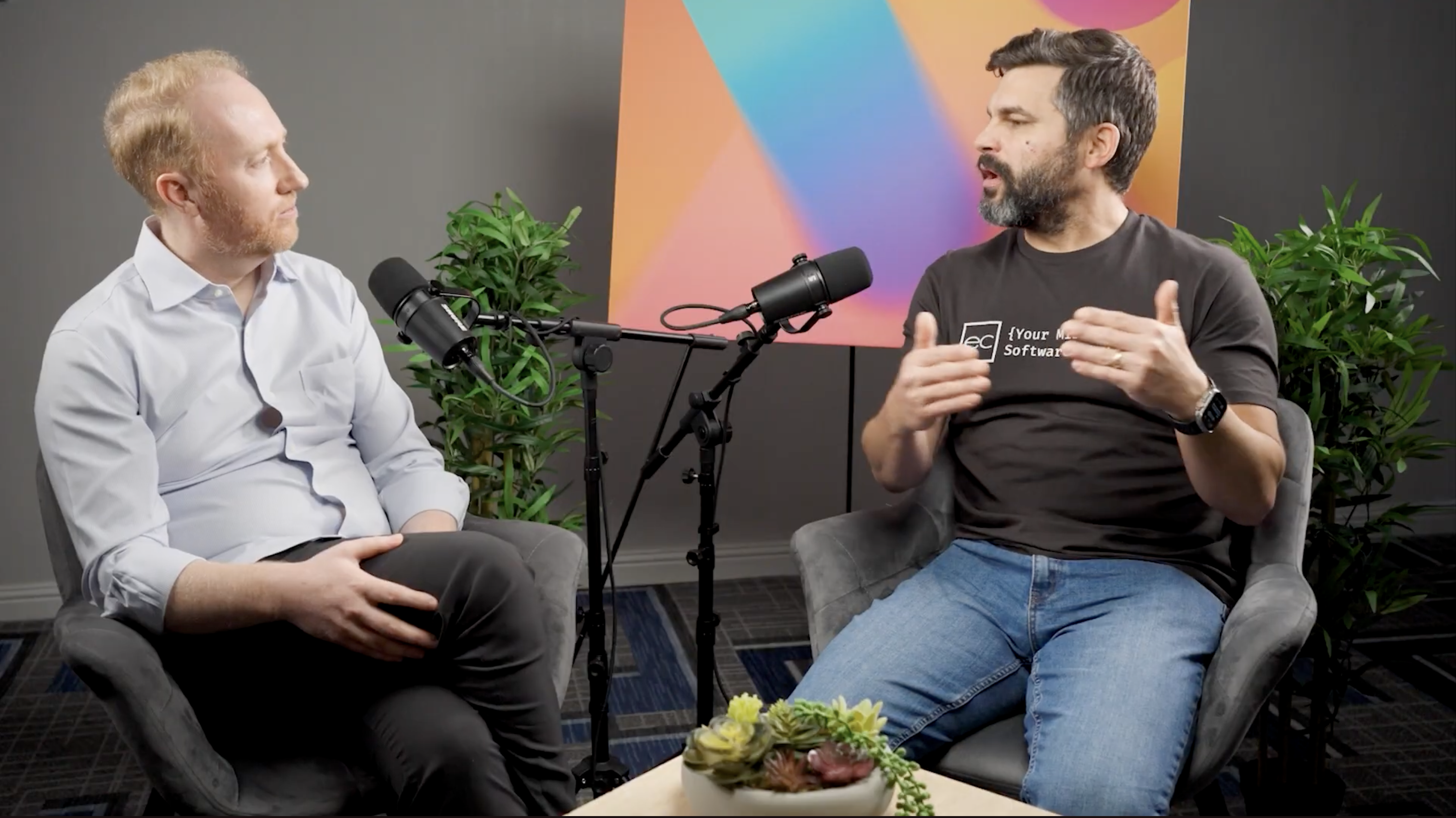
Money makes the world go round, and it's one of the more uncomfortable topics in the faith and mission world. In this panel, recorded at the Missional AI 2026 Global Summit in Silicon Valley, James Poulter (JP) gets straight into financing, investment and building things that last where mission meets the marketplace.
He's joined by three people who have raised capital, deployed it and watched founders flourish and stumble:
The conversation starts somewhere you might not expect a fundraising discussion to begin: on your knees.
Before asking how to raise capital, Henry says, ask whether you should raise it at all.
Where should a first-time founder start? "You start on your knees," Henry says. Start in God's Word and make sure you're truly called to what you're doing, because fundraising brings very difficult seasons.
He speaks from experience. Back in 2001, his company went 0 for 40 in venture raises. Part of the reason, he says, was that they were "more willful than faithful." They never sought God's will about whether to raise capital in the first place. Entrepreneurs are biased toward thinking outside money legitimizes what they're doing, and that may not be of God. Today, more than in the past 25 years, a little money can go a long way.
Henry sees three distinct paths:
The danger comes when founders blur the second and third paths. Henry describes a successful Christian entrepreneur who raised a $13 million round from faith-driven investors at a valuation he estimates was $20 million too high. It meant less dilution, which would have worked if it were the last capital the company needed. It wasn't. After exhausting the available Christian capital, the company spent four or five years growing into that valuation, and both its growth and its mission suffered.
Customers give you funding, feedback and loyalty that outside investors can't, and the next generation actually wants to pay.
"The best source of financing is a customer," James says. Investors assume they own part of your company, which creates dynamics most people don't anticipate. Many founders believe a famous VC firm's backing legitimizes them, but more often it means that firm owns a chunk of the company and has demands on you.
Building has never been cheaper. Twenty years ago, you needed real capital just to buy servers. Now you can test whether something is commercially viable much faster. At the cutting edge, from top accelerators to leading VC firms, the focus has shifted from how to raise money to how to build something someone will buy. Business schools may still emphasize fundraising, but builders in Silicon Valley are skipping that question and asking whether they can make something people will pay for.
Jess sees a common hurdle in the missions world: the church has set a precedent that things should be free or donation-based. But the next generation "actually don't like free things," she says. When they pay, they feel they're exchanging value, and they engage more deeply. By handing everything out free, the church may be missing them.
Customers also build traction, and traction builds the confidence investors look for. Selling to customers and selling to investors are very different skills, Jess notes, and with AI enabling fast iteration, founders lose out if they focus on venture capital instead of doubling down on customers.
James is a strong believer in Christian philanthropy, but warns that founders often treat it as easy money. It isn't. When you make claims to a patron or donor, you're making commitments, not only legal ones but before God. Starting there instead of with the actual work can leave founders trapped.
Henry adds that paying customers create a feedback loop: you're more likely to complain about a botched dessert on a $100 meal than a free one. Delighted customers refer others. Research suggests customers acquired through paid ads on platforms like Facebook or Google are the most likely to leave, while those who come through referrals or grow their spending are far less likely to churn. Coming from two institutional investors, the message is clear: institutional investing should be a last resort.
AI is changing business models so quickly that investors and founders alike must think from first principles.
The pace feels relentless, but James notes that part of that is the media ecosystem, which pushes us toward the latest hot take. Beneath it, big structural shifts are underway, and seeing them is why investors get paid.
One shift: subscription software, as a model, is changing. It's only been around for about 25 years; "it's not like this is a thousand-year institution." We're in a liminal moment between business models, which opens space for bold entrepreneurs. Investors can't cling to old evaluation frameworks. Everyone is forced to think from first principles about the real relationship with the customer. Founders can't hide behind buzzwords, and VCs can't rely on lazy shortcuts.
Henry sees AI as a tool to accelerate human relationships of care. He points to Passage Health, which uses AI to help autism clinics see patients faster, cutting what can be a six-month wait. No app can offer the compassion a young parent needs. But if AI helps practitioners reach families sooner for human-to-human care, "now we can see God's hand through it." His advice: focus AI on a specific vertical where it can deliver care. That builds understanding of real needs and creates defensibility.
James suggests taking smaller bets on broader ideas, including some that seem "slightly kookier": "more Berkeley than Stanford." Five years ago he might have dismissed an idea that seemed obviously dumb. Now he takes a second look, because as technology changes, culture changes too.
Jess calls this a kingdom-oriented, contrarian lens. In the valley, shiny object syndrome is real, and people rush toward the latest pot of gold. Instead, she urges discipline: look beneath the surface, go back to first principles and write smaller, more intentional checks. Investors should also understand the full AI system, including the tokens and constraints underneath, not just one layer.
When AI can copy almost anything, human trust and distribution may be the advantage it can't replicate.
Jess sees human trust networks as the one thing AI can't do. Some of the strongest moats she sees are distribution networks, which rest on trust. One family company she knows has 40 years of trusted relationships with vendors, suppliers and friends, something that can't be remade. That's deeply kingdom-minded, she says, because God has given us relationship at the core.
But if trust takes years to build, how do young people get in? Jess sees a frenzy among both older and younger generations, and among the young, fear tied to a mental health crisis: if I don't jump on this now, I'll have no future. That's where founders, entrepreneurs and investors can offer reassurance, and pass on precious relationships. More than tools or capital, she says, what can be handed down is trusted relationships, and the kingdom should lead the way in doing that.
Henry envisions the body of Christ sharing data to tackle problems like foster care, hunger and trafficking.
Henry has recently started an initiative focused on solving the world's biggest problems. The key, he says, is great datasets contributed by the body of Christ. Imagine the top 20 clean water organizations, or the top 20 evangelism and church-planting organizations, contributing clean data and combining it with secular datasets, such as which podcasts and TV shows people watch. Together, that could reveal where the next church should be planted, and why.
It will take faith-driven charities, among more than a million, agreeing to share their data for the good of the problem, even where their data isn't great. Henry believes AI could help the church better allocate God's capital and solve the foster care crisis in America. There are roughly 400,000 churches and 400,000 kids in foster care, and what works in Akron may not work in Colorado Springs. With public and Christian data, he believes AI can help address hunger, joblessness, church planting and trafficking.
Henry Kaestner and James Cham also appeared on the main stage at SV26 in "Activating AI for the Kingdom" with Promod Haque. Find it in the Missional AI Video Library under Silicon Valley 2026, or in the SV26 Keynotes playlist on YouTube.
Registration for Missional AI SFO27 is now open. We're back in San Francisco, March 30–April 1, 2027. Super early-bird pricing, the best rate all year, runs September 24 through October 8, with earlier access to the hotel block. Grab your spot at missional.ai.