
AI Ethics
MAI Podcast
AI in Missions

More and more people find organizations by asking ChatGPT, Claude, Perplexity or Gemini. So what are those models saying about your ministry, and where are they getting it from?
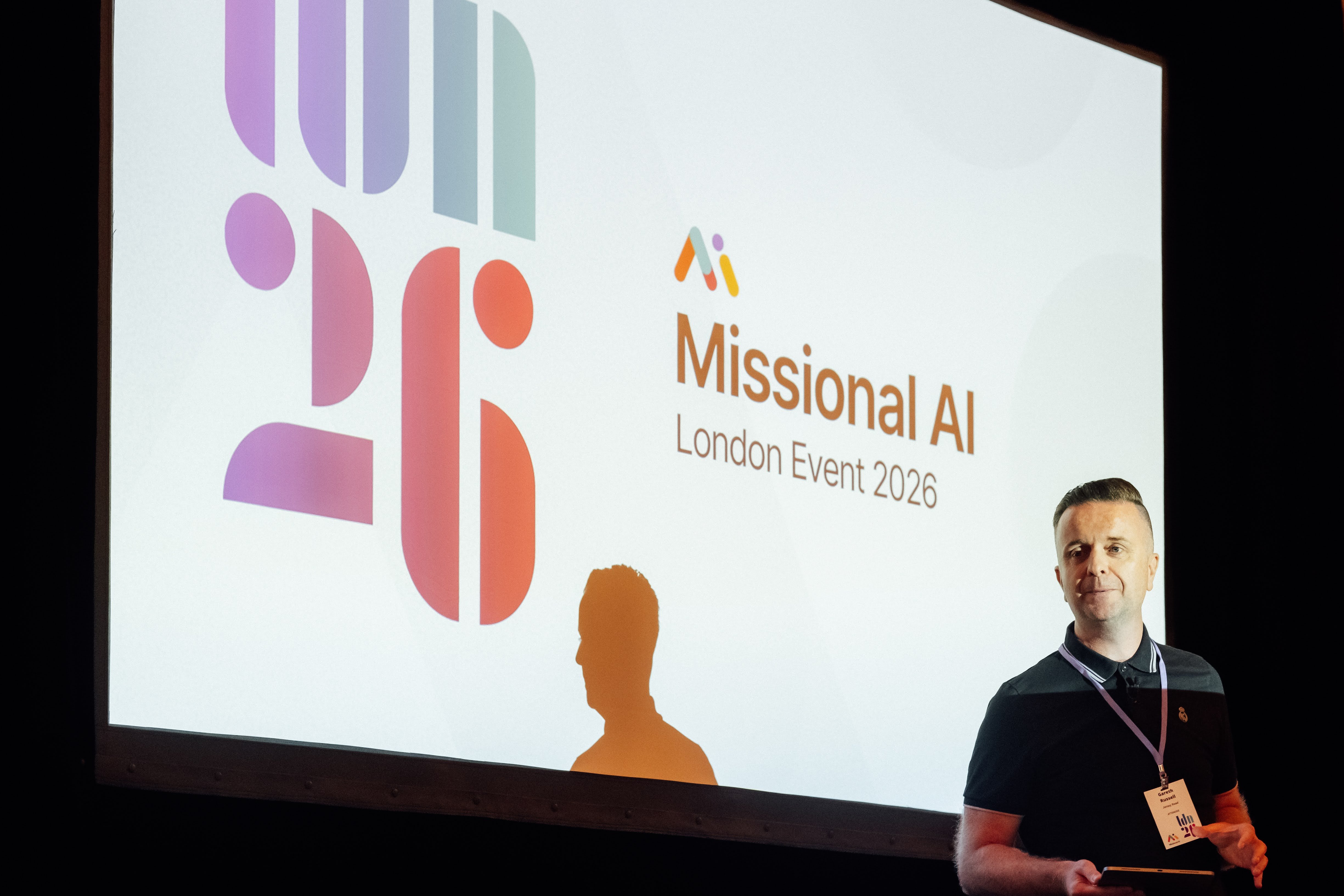
Recording at Premier in central London on the eve of Missional AI London 2026, James Poulter (JP) checks back in with Gareth Russell, CEO of Jersey Road. Gareth founded the integrated communications agency 16 years ago to reframe public perceptions of Christianity. It now has about 22 team members across the UK and Australia, works only with Christian organizations and helps global ministries like YouVersion, Gather and Come and See with their communications.
A year after his first appearance on the podcast, Gareth returns to talk about AI search, reputation in the AI era, deepfakes and how to avoid drowning in AI-generated sameness.
In AI search, most of what models say about an organization comes from earned media, so a strategic communications approach matters more than ever.
A new field is emerging, variously called AEO, AIEO or GEO (generative engine optimization): the art and science of getting AI models to notice what you do. Is it on ministries' radar? Gareth sees it getting there. Faith-based organizations aren't as far behind with AI as they were with social media, though it varies widely. Many feel they've only just mastered SEO and social, but GEO is coming faster and is a completely different discipline. Ministries need to get there quickly.
The biggest shift is where models get their information. Gareth has seen estimates from 68% to 82%, but either way, most content in AI answers comes from earned media: what others say about you, not your own website, blog or social channels, and not paid content. That includes news stories, other people's blogs and social posts.
For now, authority seems to matter most. More high-profile sources carry more weight, and appearing in several authoritative outlets is better still. But this isn't about chasing coverage for its own sake. Gareth often tells clients that a single piece in The New York Times or The Guardian is "vanity, not strategy." You still need to know your audience, choose channels that reach them and stay consistent in your message, because you want AI models to position you the way you intend.
The good news is this is an opportunity for small charities as well as large ones. It doesn't require a huge budget; it means focusing your work more deliberately. Small, well-targeted efforts can bring good wins.
Jersey Road dropped "PR" from its name years ago, partly to focus on integrated communications, and partly because PR is often seen as spin or making problems disappear, which isn't what they want to be.
Christian organizations should steward their reputation by building trust, planning for crises in advance and handling them with humility.
AI makes reputation a double-edged sword: if models pick up something negative, it can stick around for a long time. Jersey Road has reframed reputation management as reputation governance, because reputation should be stewarded. Too much of PR has been transactional and lacking in values. The question is what a values-led approach looks like for organizations that want to reflect Christ.
"Christian organizations shouldn't be about protecting their brand; they should be about building trust," Gareth says. That takes a different posture: planning for crises rather than only reacting, training your team and being clear in advance on your positions on likely issues, including AI.
It's not the crisis itself that does the damage, he says; it's how you handle it. If an organization responds well, being responsible, values-aligned and humble, AI models picking up the story isn't necessarily bad. Some clients have even seen their brand equity grow after handling a crisis well, though that's never the reason to respond rightly. Organizations get it wrong when they become defensive and fearful of losing supporters, face or platforms.
AI also brings new kinds of risk, such as someone impersonating a leader, or images of children on a charity's website being misused in ways that harm the child, their family and the organization. Ministries can't wait for a crisis to hit. When a journalist gives you a few hours to respond, you don't want to be convening your board to figure out your position. Have those nuanced conversations ahead of time.
New risks don't mean retreating from public engagement. They mean adapting, being agile and staying where your audience is.
With AI tools able to create a convincing avatar from a short clip, will public figures shy away from sharing content? Gareth points out that good communication has always depended on context. Every major shift, from smartphones to high-speed internet, brought new risks, but the answer wasn't to shut down. It was to adapt and become more agile. AI brings greater opportunities than ever to reach people, and it accelerates them massively.
His advice: learn, and go where people are. He points to William Booth, founder of the Salvation Army, who used brass bands and set new words to popular tunes to meet people where they were. ("So he deepfaked the songs," JP jokes.) Christians should be cautious, wise and discerning, and prepare for the risks before they get out of hand.
Can ministries respond quickly, for example with a genuine phone video to counter a deepfake? Most aren't there yet, Gareth says. Many still fear that correcting a falsehood will drag them into the story. His advice is to be quick, truthful and clear, and to be set up for it, with internal buy-in. That's often the hardest part: younger staff are ready to move, but older leaders can be more cautious.
AI can extend the reach of great teaching across generations and languages, as long as organizations are transparent about how it's made.
As a generation of ministry leaders retires, AI offers a chance to extend the life of their teaching. Gareth points to the ABBA Voyage show in London, where holographic avatars perform nightly, and to Tim Keller's podcast, which he says is doing as well as ever. AI may one day let audiences see such teachers deliver their content again. There will be ethical questions and a need for clear frameworks. The bigger risk, JP notes, is others putting words in people's mouths they never said. Gareth sees a parallel with luxury watches: there are real ones and fakes, and those who know can tell. Clarity about what's authentic will be key.
AI is also opening new global reach. Gareth describes a client campaign across 96 countries in which content was translated live to engage every audience instantly. JP notes that creators like Stephen Bartlett now publish in many languages.
Is that a reputational risk if people later discover a speaker doesn't speak their language? Only without transparency, Gareth says. Label things clearly. "Christian organizations should be the most transparent organizations on the planet," he says. "We should be leading the way in this, and if we're not, there's a problem." He cites a bamboo bicycle company that livestreamed its leadership meetings. He wouldn't recommend that, but he loves the posture behind it.
AI tools make decent content easy, but cutting through takes distinct thinking, credibility and a human touch.
AI is democratizing design and content: JP recently received a children's party invitation clearly made with AI that looked far better than a typical DIY design. For ministry communications teams, is this an opportunity or a source of sloppy content?
Gareth's first advice is to learn the platforms, because each does different things well. In his experience, Claude is great for writing and ChatGPT is better for images. Then learn how to get the best out of them. Much of today's slop comes from people typing a quick prompt with little thought. He finds himself scrolling past obviously AI-generated posts on LinkedIn.
There's a bigger concern too. AI tends to take best practice and put it in the same format, so if everyone generates their thought leadership with AI, everything starts to look the same. Gareth has urged organizations not to outsource thought leadership: AI can be a great partner in developing and presenting ideas, but you still need to think, wrestle with the issues and form your own views.
You don't need to be unique, he says; very little is. But you do need to be distinct, and simply good at what you do. That includes not taking yourself too seriously; AI output often lacks personality. And while authenticity may be overused as a buzzword, credibility still matters.
JP points to Dave Ramsey's organization: polished hours of daily radio alongside Rachel Cruz sharing money tips from the driver's seat of her car, and both perform well. His own only viral video this year was a lighthearted clip of flying economy with his kids, made with the least AI. Being genuine at the right moment still cuts through.
Listen to the full episode with Gareth Russell on the Missional AI Podcast. To connect with Jersey Road, find them on LinkedIn, their most active channel, or visit their website. Or, as Gareth jokes, just ask ChatGPT.
For more of Gareth's thinking, read our earlier blog post from his first podcast conversation, "Silicon Valley to Church: AI's Impact on Ministry Strategy."
Subscribe to the Missional AI Podcast wherever you listen, and visit missional.ai to sign up for the newsletter and register for upcoming gatherings, including the next Global Summit in San Francisco, March 30–April 1, 2027.